













Polyethylene and Polypropylene
Definition and Basic Chemistry of PE and PP
Polyethylene (PE) and Polypropylene (PP) are two of the most widely used food grade polymer films in the packaging industry. Both belong to the polyolefin family, produced through the polymerization of olefins derived from petroleum or natural gas.
- Polyethylene (PE) is made from the polymerization of ethylene (C₂H₄) monomers, resulting in a flexible, chemically resistant material.
- Polypropylene (PP) is formed by polymerizing propylene (C₃H₆) monomers, typically offering higher stiffness, better temperature tolerance, and improved clarity compared to PE.
Despite similarities in chemical origin, the differences in molecular structure give PE and PP distinct mechanical, thermal, and barrier properties that directly influence their use in flexible packaging materials for food.
Types of Polyethylene Used in Food Films
Food packaging applications use several grades of PE, each tailored for specific performance needs:
- LDPE (Low-Density Polyethylene) – Soft, highly flexible, excellent clarity, and good sealability. Common for bread bags, fresh produce wraps, and lightweight film.
- HDPE (High-Density Polyethylene) – Stiffer, more opaque, high moisture barrier, and excellent chemical resistance. Popular for cereal liners and frozen food bags.
- LLDPE (Linear Low-Density Polyethylene) – Stronger puncture resistance than LDPE, good stretchability, and widely blended with other materials for durability. Ideal for heavy-duty and stretch films.
For more insights into safe food storage with PE packaging, you can refer to food safe PE packaging for households.
Types of Polypropylene Used in Food Films
Polypropylene comes in two main variations for packaging:
- PP Homopolymer – Higher stiffness, good heat resistance, good clarity; suitable for snack packaging and confectionery wraps.
- PP Random and Impact Copolymers – Modified for enhanced clarity or toughness; ideal for refrigerated and frozen foods due to improved impact resistance.
PP films are often preferred where heat resistance and visual appeal are crucial, such as in microwaveable ready meal trays or high-gloss snack wrappers.
Production Process Highlights
Although both are produced through catalytic polymerization, they differ in process details:
- PE is typically produced under high or low pressures using Ziegler-Natta or metallocene catalysts, with variations in branching controlling density and flexibility.
- PP production relies on stereospecific catalysts to control the crystalline structure, giving it increased rigidity and clarity compared to PE.
Both materials are extruded into thin film using blown film or cast film processes, followed by stretching, coating, or lamination to achieve specific performance needs like enhanced barrier properties or printability.
Key Properties Relevant to Food Packaging Films
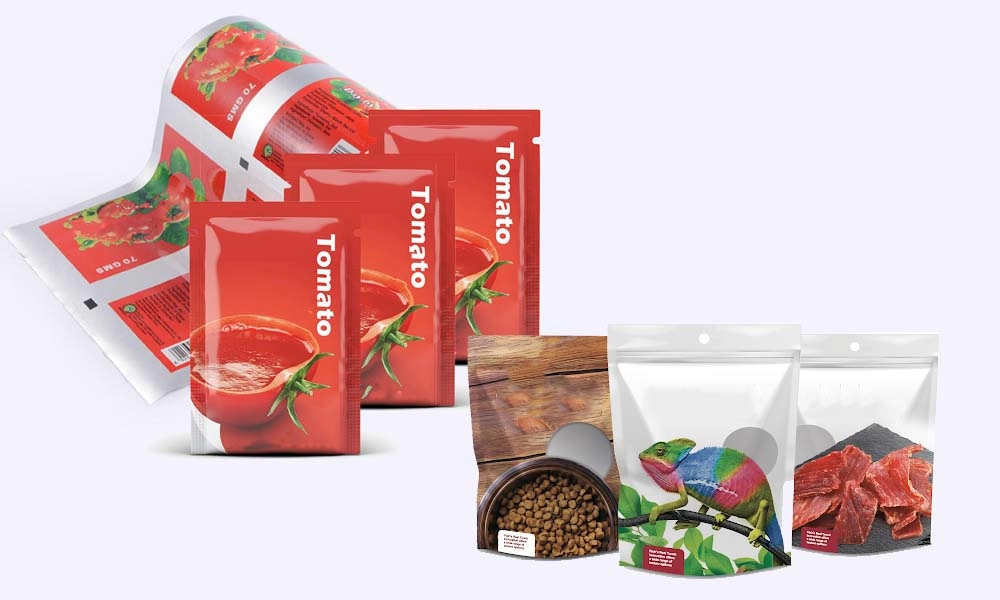
When choosing polyethylene (PE) vs polypropylene (PP) for food packaging films, it comes down to a few core properties that affect performance, safety, and value. Here’s how they compare in the areas that matter most.
Mechanical Strength and Flexibility
- PE (especially LDPE and LLDPE): Softer and more flexible. Great for wrapping irregular shapes without tearing.
- PP: Stiffer and more rigid. Holds its shape better, which can be useful for structured or stand-up packages.
- In use: PE is preferred for stretch and cling wraps, while PP works well when shape retention matters, like in snack pouches.
Barrier Properties: Moisture, Oxygen, and Aroma
- PE: Strong barrier to moisture but weaker against oxygen and aroma transfer.
- PP: Better oxygen and aroma barrier than PE, helping preserve flavor and freshness longer.
- Best use match: PE suits fresh produce with high moisture needs; PP works better for dry snacks, coffee, and prepared meals.
Heat Resistance and Sealability
- PE: Lower melting point, seals at lower temperatures — saves energy in production but can’t handle very high heat.
- PP: Higher heat tolerance, making it suitable for microwaveable and hot-fill packaging.
- Seal strength: PE tends to offer soft, reliable seals; PP seals are stronger and more rigid but require higher sealing temps.
Transparency and Gloss
- PE: Offers good clarity in LDPE films, but not as glossy as PP.
- PP: Typically crystal clear with high gloss, giving packages a more premium look (popular for retail display).
Chemical Resistance
Both food-grade PE and PP are resistant to acids, bases, and most food ingredients, so there’s little risk of chemical interaction with the contents. This makes them safe for a wide range of products, from fatty foods to acidic sauces.
Food Safety and Compliance Standards
For use in the United States, both plastics must meet FDA food-contact regulations. Many suppliers also carry BPA-free, ISO, and HACCP certifications to ensure safety and traceability. When buying, always confirm:
- Material grade (food-safe certifications)
- Compliance with local/state packaging laws
- Proven testing for migration limits and contaminants
Quick comparison table for PE vs PP in food packaging:
| Property | Polyethylene (PE) | Polypropylene (PP) |
|---|---|---|
| Flexibility | High | Medium |
| Stiffness | Low | High |
| Moisture Barrier | Excellent | Excellent |
| Oxygen Barrier | Low | Good |
| Heat Resistance | Low to Medium | High |
| Seal Temperature Range | Lower (energy-saving) | Higher |
| Clarity/Gloss | Good | Excellent |
| Chemical Resistance | High | High |
| Food Safety Compliance | FDA-approved, BPA-free available | FDA-approved, BPA-free available |
Comparative Analysis Polyethylene vs Polypropylene for Food Packaging
When deciding between polyethylene (PE) and polypropylene (PP) for food packaging films, it comes down to how each performs in protecting your product, handling temperature changes, and meeting budget and sustainability goals.
Barrier Performance and Shelf Life
- PE: Excellent moisture barrier, making it ideal for fresh produce, frozen items, and products sensitive to drying out.
- PP: Better oxygen barrier compared to standard PE, which can help extend the shelf life of products where oxidation is a concern (like chips, nuts, and baked goods).
- For aroma-sensitive foods, both work well, but metallized PP offers stronger odor protection.
Bottom line on barriers: PE helps lock in moisture. PP slows oxygen flow. Choose based on whether humidity or oxidation is the bigger threat to your product.
Flexibility vs Stiffness
- PE films are more flexible and softer to the touch, making them great for lightweight wraps and bags that need easy handling.
- PP films are stiffer and more rigid, giving packages a crisp look and making them easier to stack or stand on shelves.
- Flexible PE works best for produce bags, bread packaging, and overwraps.
- Stiffer PP is preferred for confectionery wraps, snack pouches, and retail-ready packs where form holds value.
Temperature Tolerances and Cooking Use
- PE: Safe for freezing, but low to medium heat resistant. Not ideal for high heat or hot-fill unless it’s specially modified.
- PP: High heat resistance, making it well-suited for microwaveable trays and hot-fill processing without deforming.
- For frozen-to-microwave applications, multilayer films often combine PE for sealing and PP for heat durability.
Cost and Availability
| Feature | PE | PP |
|---|---|---|
| Material Cost | Generally lower | Slightly higher |
| Availability in US | Widely produced, easy to source | Broad supply, but some specialty grades may cost more |
| Printing & Lamination | Easy to process | Excellent print clarity, great for high-end designs |
In most US markets, PE remains the cheaper pick for everyday food wraps, while PP offers better premium appeal for retail packaging.
Environmental Impact and Recyclability
- Both PE and PP are recyclable in theory, but the ease depends on local recycling facilities.
- PE films (especially LDPE) fall under recycling code #4, but acceptance varies by municipality.
- PP films have code #5, which is less frequently collected but growing in acceptance.
- PE production typically has a slightly lower carbon footprint per pound than PP.
- For sustainable packaging goals, look for post-consumer recycled (PCR) PE or PP options, or explore blends for sourcing flexibility.
Typical Applications of Polyethylene and Polypropylene Films in Food Packaging
Common Uses for Polyethylene Food Packaging Films
Polyethylene (PE) films are widely chosen because of their flexibility, moisture resistance, and affordability. In the U.S. food market, PE films are commonly used for:
- Fresh produce bags – Lightweight LDPE films help keep fruits and vegetables hydrated while allowing some breathability.
- Bakery packaging – LDPE and LLDPE wraps protect bread, rolls, and pastries from drying out while keeping packaging clear and easy to seal.
- Frozen food wraps – HDPE and LLDPE films perform well at low temperatures and resist brittleness in freezers.
- Snack packaging liners – PE layers are often used inside multi-layer pouches to provide moisture protection for chips, nuts, and crackers.
Why industries choose PE: Grocery chains and fresh food suppliers prefer PE for its cost-effectiveness, clarity, and seal strength in cold or ambient storage conditions. It’s also easy to process into bags and wraps in high volumes.
Common Uses for Polypropylene Food Packaging Films
Polypropylene (PP) films are popular when higher clarity, stiffness, and heat resistance are needed. In the U.S., PP is widely used for:
- Ready meal trays and overwraps – BOPP and cast PP withstand microwave reheating and keep packaging shape.
- Dairy product wraps – PP helps keep cheese, yogurt multipacks, and butter fresh with strong aroma and moisture barriers.
- Confectionery wraps – Films with high gloss and printability make chocolates and candy look appealing on shelves.
- Heat-sealed packs – PP melts at higher temperatures, making it ideal for forming airtight, tamper-evident seals.
Why industries choose PP: Meal kit companies, confectionery brands, and dairy producers value PP for its premium look, longer shelf life support, and performance under higher temperatures.
Polyethylene vs Polypropylene in Industry Preferences
| Industry | Preferred Material | Main Reason |
|---|---|---|
| Fresh produce | PE | Flexible, moisture control, low cost |
| Bakery | PE | Soft touch, clarity, seals well |
| Frozen foods | PE | Cold resistance, durability |
| Ready meals | PP | Heat tolerance for microwave use |
| Dairy | PP | Stiffness, aroma barrier |
| Confectionery | PP | High gloss, print quality |
Key takeaway for U.S. packagers:
- Go with PE if flexibility, low temp resistance, and affordability are top priorities.
- Choose PP if your product needs heat resistance, a stiffer feel, and a premium look.
Why Choose Artfullife for Food Packaging Film Needs
Wide Product Range and Customization
Artfullife offers both polyethylene (PE) and polypropylene (PP) films in different grades to meet various food packaging requirements — from fresh produce bags to high-barrier films for snacks and ready meals.
You can choose from:
- LDPE, LLDPE, HDPE films for flexibility or moisture protection
- PP homopolymer and copolymer films for better clarity, heat resistance, or stiffness
- Custom thickness, width, color, and print based on your product needs
- Special performance films (anti-fog, high-barrier, freezer-safe, microwave-safe)
This flexibility makes it easier for U.S. food businesses to match material performance with packaging goals without overpaying for excess specs.
Quality and Food Safety Compliance
All films are food-grade certified and comply with FDA and EU standards for food contact materials.
Each batch goes through:
- Strict quality checks (thickness tolerance, sealing strength, barrier performance)
- Traceable production records for food safety audits
- Third-party testing upon request for U.S. buyers who need documented compliance
This ensures your packaging meets U.S. market safety requirements, reducing risk in inspections and recalls.
Competitive Pricing from Factory Source
Buying directly from Artfullife’s wholesale factory in China means:
- Lower cost per roll without middlemen markups
- Bulk-order discounts for distributors and large food brands
- Consistent supply with reliable production capacity
Here’s a quick comparison of sourcing advantages:
| Factor | Artfullife Direct | Typical Middleman Supplier |
|---|---|---|
| Cost per roll | Lower | Higher |
| Lead time | Shorter | Longer |
| MOQ flexibility | Adjustable | Fixed high minimums |
| Customization options | Wide range | Limited |
Logistics and Support for US Buyers
Artfullife works with established freight forwarders to handle U.S. imports fast and reliably. Whether you need full container loads or smaller shipments, they:
- Arrange door-to-door delivery or FOB China port shipments
- Handle customs paperwork to save you time
- Provide real-time tracking and responsive communication
- Offer after-sales support to resolve any issues quickly
This means U.S. food businesses can scale packaging supply without worrying about long delays or communication breakdowns.
Buying Tips for Selecting the Right Polyethylene or Polypropylene Film for Food Packaging
Choosing between polyethylene (PE) and polypropylene (PP) films for food packaging isn’t just about picking a plastic type — it’s about matching the film’s performance to the unique needs of your product, how it will be stored, and how your customers will use it. Here’s what you should focus on when making the decision.
Define Product Requirements
Start with the basics of your product and packaging goals:
- Barrier strength: Do you need high moisture protection, oxygen resistance, or aroma sealing? For example, PP films often have better moisture barriers, while certain PE grades excel at flexibility.
- Temperature resistance: Will the packaging face freezing, boiling, or microwaving? PP generally handles higher heat, making it ideal for microwaveable ready meals, while PE works well for frozen and fresh produce applications.
- Product shape and weight: Heavy or rigid products may need stiffer PP films, while softer items may benefit from the stretchability of PE.
Understand Regulatory and Safety Standards
In the U.S., food-grade polymer films must meet FDA and USDA compliance standards for food contact.
- Always confirm your supplier provides compliance certificates and documentation for your market.
- Double-check if state-level rules (like California’s Proposition 65) apply to your product type.
Factor in Cost vs Performance
Balancing cost and function is key:
- PE films are generally more cost-effective for large-volume, flexible packaging.
- PP films might be slightly more expensive but offer better heat tolerance and visual clarity for premium packaging.
- Consider equipment compatibility — switching materials may require adjustments to sealing temperatures and processing speeds.
Consider Sustainability Goals
Today’s buyers expect eco-conscious packaging:
- Both PE and PP are recyclable, but local recycling capabilities vary — check if your target market accepts your film type.
- Look into down-gauging (using thinner films) to save material without losing performance.
- Ask about supplier options in biodegradable or post-consumer recycled (PCR) content films.
For more ways to align with sustainability while protecting product freshness, you may want to check out our guide on how cling film keeps food fresh and increases sales.
Source from Reputable Manufacturers
The quality of your film depends largely on who makes it:
- Work with suppliers who have ISO quality certifications and proven food safety compliance.
- Ask for sample runs to test sealing, print quality, and durability before ordering in bulk.
- If you’re sourcing internationally, ensure your supplier can handle logistics, customs paperwork, and on-time delivery. For wholesale guidance, our procurement guide for food storage bags has useful insights for U.S. buyers working with manufacturers in China.