















When it comes to food packaging, the grade and thickness of aluminum foil can make all the difference in freshness, safety, and performance. But with so many options out there, how do you know which one is right for your product?
In this guide, you’ll quickly learn the different grades and thicknesses of aluminum foil used in food packaging, how they affect durability and barrier protection, and what industry standards you should look for. Whether you’re wrapping baked goods, sealing ready-to-eat meals, or packaging perishable items for retail, choosing the right foil is key to quality and compliance.
Let’s break it down — so you can choose the perfect foil for your packaging needs.
What is Aluminum Foil
Aluminum foil is a thin, flexible sheet made from pure aluminum or aluminum alloys. It is a mainstay in the food packaging industry due to its unique combination of barrier properties, heat resistance, and formability.
Basic Composition and Manufacturing Process of Aluminum Foil
Food packaging aluminum foil is generally produced from 99% pure aluminum ingots. Depending on the application, alloys may be added to enhance strength, flexibility, or corrosion resistance.
The manufacturing process typically involves:
- Casting aluminum into large slabs or ingots
- Hot rolling to reduce thickness
- Cold rolling for finer reduction and surface smoothness
- Annealing (heat treatment) to achieve the desired flexibility
- Final finishing including surface treatment or coating if required for specific food applications
This precise process allows producers to control foil thickness down to microns while maintaining uniformity.
Properties That Make Aluminum Foil Ideal for Food Packaging
Aluminum foil stands out among food packaging materials because of its unique multi-functional performance:
- Excellent barrier properties – Completely blocks light, oxygen, moisture, and contaminants
- Thermal performance – Withstands both high oven temperatures and extreme freezer conditions
- Formability – Easily molds to various shapes, from wrapping small candies to lining large trays
- Non-toxic and food safe – Meets FDA-approved food contact requirements when produced to food grade specifications
- Lightweight yet strong – Reduces shipping weight without compromising product protection
- Non-absorbent and grease-resistant – Keeps flavors pure and prevents cross-contamination
- Recyclability – 100% recyclable without loss in quality, supporting sustainability goals
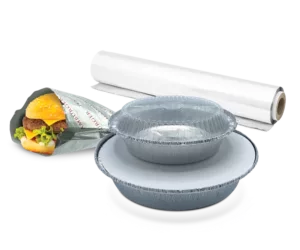
These characteristics make aluminum foil a preferred choice for everything from bakery wrap and takeaway containers to vacuum-sealed perishable goods packaging.
Overview of Aluminum Foil Grades for Food Packaging
What Aluminum Foil Grade Means
In food packaging, “grade” refers to the quality, purity, surface finish, and performance standards of the foil. The grade determines where and how the foil can be used—whether it’s for wrapping sandwiches at home, sealing pharmaceutical products, or making food-safe trays for commercial kitchens. Higher grades meet stricter safety and barrier requirements, especially for food and medical use.
Common Grades Used in Food Packaging
1. Commercial Grade
- Designed for general-purpose wrapping and catering.
- Suitable for handling non-acidic and non-salty foods.
- Often used in restaurants, delis, and large-scale food prep.
2. Pharmaceutical Grade
- Made with extremely high purity aluminum.
- Coated or laminated for extra barrier protection.
- Perfect for blister packs, medical food supplements, and sensitive products that need tight sealing.
3. Food Grade
- Meets FDA and other international food safety standards.
- Free from harmful coatings, heavy metals, or contaminants.
- Approved for direct contact with food, hot or cold.
Quality Criteria That Differentiate Grades
The difference between aluminum foil grades often comes down to:
- Purity Level – Higher-grade foils have fewer impurities.
- Barrier Properties – The ability to block air, moisture, light, and bacteria.
- Surface Treatment – Smoothness, coating, or lamination for specific uses.
- Strength and Durability – Resistance to tearing, puncturing, or warping under heat.
- Certifications – FDA, USDA, or Chinese GB standards for safety compliance.
Thicknesses of Aluminum Foil in Food Packaging
When choosing aluminum foil for food packaging, thickness plays a big role in its durability, heat retention, and barrier protection. Foil for food use typically ranges from 0.00017 inches (4.3 microns) to 0.003 inches (76 microns), but the right thickness depends on the application.
Standard Thickness Ranges for Food Packaging
Here’s an easy breakdown of the common thickness categories you’ll find in the U.S. market:
| Type of Foil | Typical Thickness | Common Uses |
|---|---|---|
| Thin Foil / Household Foil | 0.00017–0.0006 in (4.3–15 microns) | Wrapping sandwiches, bakery items, light food covering |
| Standard Duty Foil | 0.0006–0.0009 in (15–23 microns) | General cooking, takeaway wraps, lining food trays |
| Heavy Duty Foil | 0.001–0.003 in (25–76 microns) | Foil pans, roasting, freezer storage, BBQ use |
Effects of Different Foil Thickness on Performance
-
Thinner Foil (Household Grade)
- Lightweight, flexible, and economical.
- Best for short-term storage and foods without sharp edges.
- Tears more easily and doesn’t hold up well in high-heat cooking.
-
Standard Duty Foil
- Good balance between flexibility and strength.
- Withstands oven use for baking and reheating.
- Suitable for most everyday cooking and packaging tasks.
-
Heavy Duty Foil
- Strong, puncture-resistant, and ideal for heavy meals with bones or sharp edges.
- Holds shape when molded around food or trays.
- Performs well in grilling, roasting, and long-term freezer packaging.
In the U.S., heavy duty aluminum foil is a popular choice for commercial kitchens, catering businesses, and food manufacturers wanting extra strength and reliability. For home cooks, standard foil covers most needs, while very thin foil is usually reserved for mass-market retail packaging of snacks or candies.
How to Choose the Right Grade and Thickness for Your Food Packaging Needs
Picking the right aluminum foil grade and thickness depends on how it’s being used, the food type, and whether it needs to handle high heat, cold storage, or transportation. Choosing wrong could mean wasted product, loss of freshness, or even compliance issues.
Key Factors to Consider
Here’s what you should look at before ordering foil for packaging:
- Food type – Acidic foods, oily foods, and dairy products might require food-grade foil with protective coating to avoid reactions.
- Packaging style – Whether you’re forming trays, wrapping items, or lining boxes, the foil’s malleability and strength matter.
- Storage conditions – Long-term freezing requires thicker foil to prevent tearing; ambient storage may be fine with standard foil.
- Cooking or reheating – For oven or grill use, heavy-duty aluminum foil holds up better, resists tearing, and maintains shape under high heat.
- Moisture and oxygen protection – Thicker foil typically offers stronger barrier properties that help extend shelf life.
Common Applications and Ideal Options
| Application | Recommended Grade | Recommended Thickness | Why It Works |
|---|---|---|---|
| Foil trays and containers | Food-grade, heavy-duty | 0.08–0.1 mm (80–100 microns) | Withstands shaping, stacking, and oven reheating |
| Wrapping bakery and confectionery | Commercial food-grade | 0.016–0.024 mm (16–24 microns) | Light, flexible, keeps products fresh without crushing |
| Packaging perishable products | Food-grade with strong barrier | 0.03–0.06 mm (30–60 microns) | Blocks moisture, oxygen, and light |
| Ready-to-eat meals & takeout | Heavy-duty food-grade | 0.04–0.09 mm (40–90 microns) | Handles thermal sealing, oven reheating, and transport |
Quick Buying Tips
- Order by thickness, not just “heavy-duty” or “standard” labels—those terms vary by supplier.
- Always check food contact certifications like FDA or GB standards. If you’re selling in both the U.S. and overseas, look for packaging that meets multiple regulatory benchmarks.
- If uncertain, ask for sample rolls to run on your packaging equipment.
For bulk use, restaurants often need wider, longer rolls—see this guide on restaurant-size aluminum foil so you can match the specs to your kitchen setup.
Standards and Regulations for Aluminum Foil in Food Packaging
When it comes to aluminum foil for food packaging, safety and quality aren’t just about the material itself—they’re backed by strict standards and regulations. Meeting these requirements ensures the foil is safe for direct food contact, performs well under intended use, and meets both domestic and international market demands.
Chinese GB Standards
If you’re sourcing from China, GB (Guobiao) standards are the national benchmarks for production and testing. For food-contact aluminum foil, standards like GB 4806.9 specify limits for heavy metals, surface coating safety, and migration levels. Manufacturers that meet GB standards ensure their foil is free from harmful substances and safe for wrapping, cooking, or storing food.
FDA Regulations in the United States
In the U.S., the Food and Drug Administration (FDA) regulates materials used in food packaging. FDA 21 CFR 178.3910 covers aluminum foil for food contact, outlining purity requirements and approved manufacturing conditions. Compliance means the foil won’t leach unwanted materials into food, even when heated. If you’re selling to the U.S. market, FDA-approved aluminum foil is important for both legal compliance and consumer trust.
International Benchmarks
Beyond China and the U.S., aluminum foil for food must also meet global standards if you’re exporting:
- EU Standards (EC 1935/2004 and EU 10/2011) – Regulate materials touching food across European markets.
- ISO 9001 and ISO 14001 – Not specific to food safety but important for quality and environmental management.
- Halal and Kosher certifications – Required in certain markets for religious compliance.
Why Compliance Matters
Choosing aluminum foil that meets recognized standards brings several benefits:
- Food Safety – Prevents contamination and ensures purity.
- Consistent Quality – Verified production methods lead to uniform thickness, strength, and performance.
- Market Access – Compliance with FDA, GB, or EU laws allows for domestic and export sales.
- Customer Confidence – Certification labels help buyers trust your product.
Advantages of Choosing Artfullife Aluminum Foil for Food Packaging
When you’re looking for high-quality aluminum foil for food packaging, Artfullife offers a blend of reliable manufacturing, flexible options, and eco-conscious production that matches U.S. market needs. Here’s why many food brands, manufacturers, and distributors choose Artfullife as their wholesale supplier.
Proven Manufacturing and Quality Control
Artfullife runs state-of-the-art production lines, ensuring every roll meets strict food safety and performance standards. The process includes:
- High-precision rolling and annealing for consistent thickness and strength
- Multiple quality checkpoints to detect any pinholes or imperfections
- Compliance with FDA regulations and Chinese GB standards for food contact safety
This means the foil you get is dependable for sealing, storing, cooking, and protecting food in commercial applications.
Wide Range of Grades and Thicknesses
Whether you need standard food-grade foil, heavy duty, or specialized pharmaceutical-grade aluminum foil, Artfullife provides options to suit different packaging needs. The thickness range covers everything from 9 microns (thin household-level wrap) to 25+ microns (heavy duty for trays and reheating). Having multiple grades on hand is essential for businesses that package different products, from delicate bakery items to ready-to-eat meals.
Customization for Wholesale Orders
For large-scale buyers, custom specifications can make a big difference. Artfullife offers:
- Custom roll width and length to fit your machinery
- Printed or embossed foil for branding and product differentiation
- Flexible order quantities to match your production schedule
By working directly with a wholesale aluminum foil supplier in China, U.S. businesses can cut costs without losing quality.
Environmental and Sustainability Focus
Sustainability is becoming a must in the U.S. packaging industry. Artfullife uses recyclable aluminum and efficient production methods that reduce waste. Options for lightweight foil help lower material use while maintaining protection, and bulk packaging cuts transportation impact. For food brands aiming to combine performance with eco goals, this approach ticks both boxes.
FAQs About Aluminum Foil Grades and Thickness for Food Packaging
Here are some of the most common questions we get about aluminum foil grades and thickness options for food packaging, along with clear answers to help you make the right choice.
What does food grade aluminum foil mean
Food grade aluminum foil meets FDA and other international food safety standards, meaning it’s safe for direct contact with food. It’s manufactured without harmful coatings or chemicals that could leach into food during storage, cooking, or reheating.
What are the common grades used in food packaging
For U.S. food packaging, you’ll usually see three main grades:
- Household or Standard Grade – Good for light wrapping, storing leftovers, and covering dishes.
- Heavy Duty Grade – Thicker, stronger, and ideal for grilling, roasting, and food transport.
- Specialty or Industrial Food Grade – Used for food service, commercial baking, and large-scale catering.
How thick is standard aluminum foil
Standard household food foil in the U.S. is typically 0.016 mm (16 microns) thick. Heavy duty foil is about 0.024 mm (24 microns), while thin foil for light wraps can be around 0.009–0.012 mm.
Does thickness affect performance
Yes. Thicker foil is stronger, resists tearing, and provides better protection against moisture, light, and oxygen. Thinner foil is cheaper, lighter, and easier to fold, but it’s also more prone to punctures.
Can all aluminum foil be used for cooking
Only food-grade aluminum foil is safe for cooking. Look for FDA-approved labeling. Non-food-grade foil may contain oils or residues from manufacturing that aren’t safe for contact with food under heat.
What grade and thickness should I choose for my food business
It depends on your application:
- Baking and Roasting – Heavy duty foil (24 microns) for strong heat resistance.
- Wrapping Sandwiches, Snacks, or Cold Items – Standard grade (16 microns).
- Frozen Storage or Long Shelf Life Packaging – Specialty multi-layer food-grade foil for maximum barrier protection.
Is heavy duty foil recyclable
Yes, as long as it’s clean and free of food residue. Most U.S. curbside recycling programs accept aluminum foil.
Do U.S. standards differ from other countries
Yes. While the FDA regulates materials for food contact in the U.S., other countries have their own rules (like China’s GB standards or EU regulations). Many wholesale suppliers in China now produce foil that meets U.S. FDA requirements for the American market.