














The Three Core Polymers Used in Commercial Cling Film
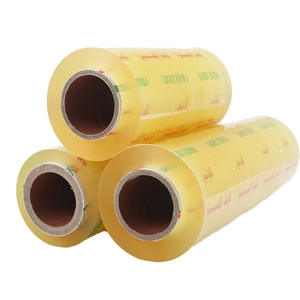
Commercial cling film primarily relies on three core polymers, each with distinct properties that influence performance, cost, and suitability for specific food types.
2.1 Polyvinyl Chloride (PVC) Cling Film
PVC cling film is traditionally favored for its excellent cling strength and clarity. It often contains plasticizers to enhance flexibility and adhesion. PVC offers good oxygen barrier properties, making it suitable for wrapping raw meats and cheese. However, concerns around plasticizer migration and environmental issues have led to stricter regulations and a gradual decline in its use—especially in the U.S. market.
2.2 Polyethylene (PE) Cling Film – LDPE, LLDPE, Metallocene Variants
PE cling film is widely used due to its safety profile and versatility. It includes low-density polyethylene (LDPE) and linear low-density polyethylene (LLDPE), which provide stretch, softness, and decent cling. Metallocene-catalyzed PE variants improve film strength and clarity while maintaining food-grade safety. PE films are microwave safe, freezer friendly, and increasingly favored as a phthalate-free alternative to PVC. They are ideal for fresh produce and general food wrapping.
2.3 Polyvinylidene Chloride (PVDC) Cling Film (Including Traditional “Saran” Type)
PVDC cling film, famously known as “Saran” wrap, excels in oxygen and moisture barrier performance. This makes it a top choice for products needing long shelf life and protection from spoilage. While offering superior preservation, PVDC films tend to be more expensive and less flexible than PE and PVC. Environmental concerns and recycling challenges also impact its adoption in commercial food wrap.
Understanding these materials helps you make informed decisions based on cost, safety, regulatory compliance, and performance needs in your food packaging operations.
Detailed Comparison Table of Key Cling Film Materials
| Material | Cling Strength | Oxygen Barrier | Microwave Safe | Freezer Performance | Food-Contact Approvals (EU, FDA, etc.) | Typical Thickness (microns) | Relative Cost | Environmental Notes |
|---|---|---|---|---|---|---|---|---|
| PVC (Polyvinyl Chloride) | High | Moderate | Limited* | Fair | Approved with restrictions (EU 10/2011) | 8–12 | Medium | Hard to recycle, contains plasticisers |
| PE (Polyethylene: LDPE, LLDPE, Metallocene) | Medium to High | Low | Yes | Good | Widely approved (FDA GRAS, EU) | 10–20 | Low to Medium | Easier to recycle, phthalate-free options |
| PVDC (Polyvinylidene Chloride, e.g., Saran) | Medium | Excellent | Limited | Good | Approved with some restrictions | 7–12 | High | Difficult to recycle, legacy use declining |
*PVC films may not be suitable for microwave use unless specifically formulated.
This table helps businesses compare commercial food wrap materials based on important performance factors and regulatory compliance. For more on material choices and supplier evaluations, see our guide on plastic cling wrap options and sustainability.
Plasticisers and Additives – The Hidden Ingredients That Make Cling Film “Cling”
Plasticisers are crucial in giving commercial cling film its characteristic stretch, softness, and cling power. Common plasticisers used include DEHA (Diethylhexyl Adipate), ATBC (Acetyl Tributyl Citrate), and ESBO (Epoxidized Soybean Oil). These additives help soften the rigid polymers, allowing films—especially PVC—to wrap tightly around food.
However, plasticisers also come with migration risks. Some older plasticisers, like certain phthalates, can transfer to food at unsafe levels, raising health and regulatory concerns. This has pushed the market toward phthalate-free plasticisers and non-plasticised polyethylene (PE) films that rely on their natural flexibility rather than additives.
Today, high-quality PE cling films often avoid plasticisers entirely, improving food safety and meeting stricter regulations such as the EU’s 10/2011. This shift supports cleaner, safer food-grade wraps without compromising on the cling and durability that commercial users need. For a deeper dive into safer cling film options, check out our guide on food-safety certified cling film for global markets.
Food-Contact Safety and Global Regulations (2025 Update)
When it comes to commercial cling film, food-contact safety is non-negotiable, especially with evolving global regulations. In the EU, Regulation 10/2011 sets strict rules on materials that can safely touch food, including limits on plasticiser migration. Starting in 2025, there’s a major push to ban certain PVC plasticisers, which have raised health concerns. This means many traditional PVC cling films will face tighter restrictions or be phased out.
In the U.S., the FDA grants Generally Recognized As Safe (GRAS) status to polyethylene (PE) cling films, making PE the preferred choice for food wrap in many commercial settings. However, some PVC films face use restrictions due to concerns about their additives and migration levels.
Every buyer should stay aware of migration limits—how much of the material’s additives can transfer to food—and ensure their cling film suppliers provide up-to-date migration testing reports. These tests confirm compliance with both EU and FDA standards, helping avoid costly recalls and protecting consumer health.
For commercial operators balancing safety and performance, understanding these regulations is vital when choosing between PVC and PE wraps. You can find more on how these requirements impact product choices in our detailed guide on premium food preservation with Artfullife cling film solutions.
Performance vs Cost – Real-World Impact of Material Choice
Choosing the right cling film material directly affects both your food quality and your bottom line. For fresh produce, breathable polyethylene (PE) films are the clear winner. They allow essential air exchange, reducing moisture buildup and extending shelf life without sweating. This helps cut down on spoilage and waste, making PE films a cost-effective option for fruits and vegetables.
When it comes to raw meat and fish, the picture changes. These items need cling films with a strong oxygen barrier and high cling to lock in freshness and prevent contamination. Here, PVC or PVDC films often perform better, but they can be pricier and less eco-friendly. So, it’s a trade-off between premium protection and cost.
For freezer and microwave applications, the material’s temperature tolerance is critical. Freezer-grade PE films resist cracking in low temperatures, while microwave-safe versions prevent harmful chemical migration during heating. Using the right film for these specific uses avoids food quality loss or safety issues.
Ultimately, what matters most is the total cost of ownership. A cheaper cling film might save money upfront but could lead to higher food waste or compliance headaches. Balancing film price against food loss percentage and operational needs helps you pick the best material for your specific case.
For more tailored guidance on choosing cling films for different foods, check out our advice on how to choose the best food cling film for your needs.
Sustainability and the Move Away from PVC in 2025
The plastics industry is shifting quickly, and cling film is no exception. PVC cling film, once popular for its great cling and barrier properties, is facing increasing scrutiny due to its environmental impact. Recycling PVC is complicated—this material releases harmful chemicals during both production and incineration, and specialized facilities to recycle it are rare in the U.S. In contrast, polyethylene (PE) cling film is far easier to recycle and has a much lighter environmental footprint, making it the preferred choice for sustainable packaging.
Bio-based and compostable cling films are gaining interest, but they still have limitations. Many of these alternatives lack the durability and cling performance of conventional plastics, and industrial composting facilities aren’t widespread, which limits their practical use today. That means for now, premium custom PE cling films offer the best balance between performance, safety, and environmental responsibility.
Retailers are already responding to these issues. Leading supermarket chains and foodservice companies in the U.S. have announced plans to drop PVC cling film from their shelves by 2025, aligning with broader sustainability goals. This shift not only benefits the environment but also meets growing consumer demand for safer, greener food wrap options.
For brands looking to stay ahead, switching to high-quality PE cling film aligns with both regulatory trends and sustainability expectations. To explore options that meet these evolving needs, check out our range of commercial-grade compact cling film designed for food safety and eco-conscious operations.
How to Choose the Right Material for Your Operation
Picking the right cling film material can save money, reduce waste, and keep your food fresher. Use this quick checklist to help decide which film fits your needs:
Decision Checklist: 10 Quick Yes/No Questions
| Question | Yes | No |
|---|---|---|
| Is high cling strength important? | [] | [] |
| Do you need a strong oxygen barrier? | [] | [] |
| Will the product be frozen? | [] | [] |
| Is microwave use required? | [] | [] |
| Do you prefer phthalate-free or plasticizer-free films? | [] | [] |
| Is food safety certification (FDA, EU) mandatory? | [] | [] |
| Do you want anti-fog or breathability features? | [] | [] |
| Is cost a major concern over premium performance? | [] | [] |
| Do you need customized roll sizes or printing? | [] | [] |
| Are you aiming to avoid PVC-based films? | [] | [] |
Recommended PE Specifications by Department
| Department | Film Type | Key Features | Best Use Case |
|---|---|---|---|
| Butchery | High-cling PE or PVC-free LDPE | Strong cling, good oxygen barrier | Raw meat, fish wrapping |
| Deli | Soft, high-clarity LLDPE | Anti-fog, moderate cling | Prepared foods, cheese |
| Produce | Breathable PE (micro-perforated) | Allows gas exchange, reduces condensation | Fresh fruits and vegetables |
| Bakery | Thin, anti-fog PE | Soft texture, good film clarity | Baked goods, pastries |
Choosing the right material depends on what you prioritize: cling strength, food safety, or environmental concerns. For example, many US retailers and food processors now prefer phthalate-free PE films over PVC due to tighter regulations and consumer demand.
For more tips on preserving freshness and product safety, check out our guide on preservative film materials that complements your cling film choices perfectly.
Artfullife’s Recommendation – Why We Specialize in Premium Custom PE Cling Film
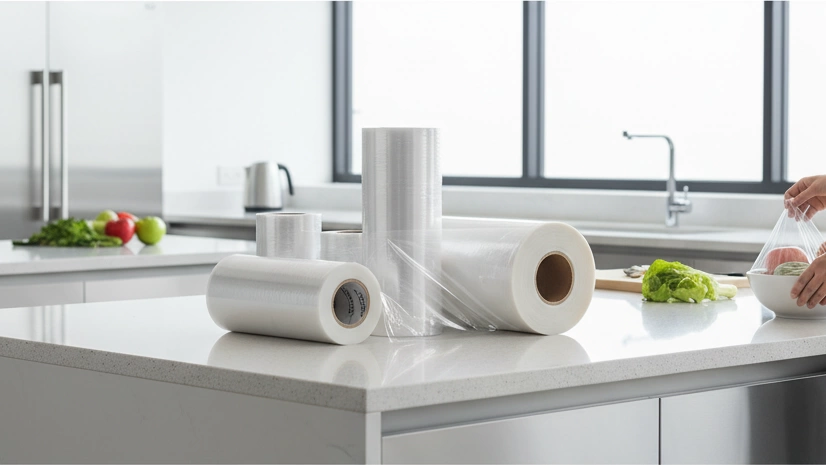
At Artfullife, we focus on supplying premium custom-made PE cling film because it strikes the best balance between safety, performance, and sustainability for U.S. supermarkets and food retailers. Our films are formulated with high-quality, food-grade resins that meet all relevant food-contact approvals and come with phthalate-free formulations, ensuring no harmful plasticisers migrate into your food.
We offer a range of available grades to fit different needs, including:
- Standard PE cling film for everyday wrapping
- High-cling versions for secure sealing of tricky items like raw meat
- Anti-fog coatings ideal for fresh produce sections
- Freezer-grade films designed to protect against freezer burn
- Microwave-safe films that let customers heat food safely
Customization is a key part of our service. We accommodate your operational needs by offering flexible minimum order quantities (MOQ) and various roll widths and lengths to optimize your usage and minimize waste. This tailored approach helps reduce food loss and control costs effectively.
Choosing Artfullife means partnering with a trusted supplier who understands why the right commercial food wrap materials matter for quality, safety, and sustainability in your daily operations.
For more details on our product range and customization options, check out our kitchen food cling film solutions.
Supplier Red Flags & Checklist When Evaluating Cling Film Manufacturers
When choosing a commercial cling film supplier, it’s crucial to know the right questions to ask. This helps avoid hidden pitfalls and ensures you get quality, food-safe products. Here are 8 critical questions to keep on your checklist:
-
Can you provide up-to-date food-contact certificates?
Look for EU 10/2011 compliance and FDA approvals specific to cling film materials.
-
Are there recent migration test reports available?
Migration testing proves the film won’t transfer harmful substances to food, especially important with plasticisers in PVC or PE wraps.
-
What type and origin of resin do you use?
Knowing if the resin is food-grade PE or PVC impacts performance, safety, and recyclability.
-
Do you offer phthalate-free or non-plasticised film options?
Phthalate restrictions are tightening in 2025; suppliers should provide safer, compliant alternatives.
-
Is your cling film microwave and freezer safe?
Confirm suitability for common use cases to avoid customer complaints and wasted product.
-
What are typical thickness options and cost tiers?
Understand film gauge choices and pricing to match your operational needs and budget.
-
Can the cling film be custom-printed or sized?
Custom options add branding value—make sure your supplier supports this.
-
Do you have sustainability commitments?
Ask about PVC-free lines, recycling info, or bio-based film options if sustainability matters to your customers.
Using this checklist ensures you pick a supplier who values transparency, quality, and compliance. For tailored options and reliable supply of food-grade polyethylene cling film, check our guide on kitchen cling film and foil dispensers to explore how to streamline your packaging workflow efficiently.