
















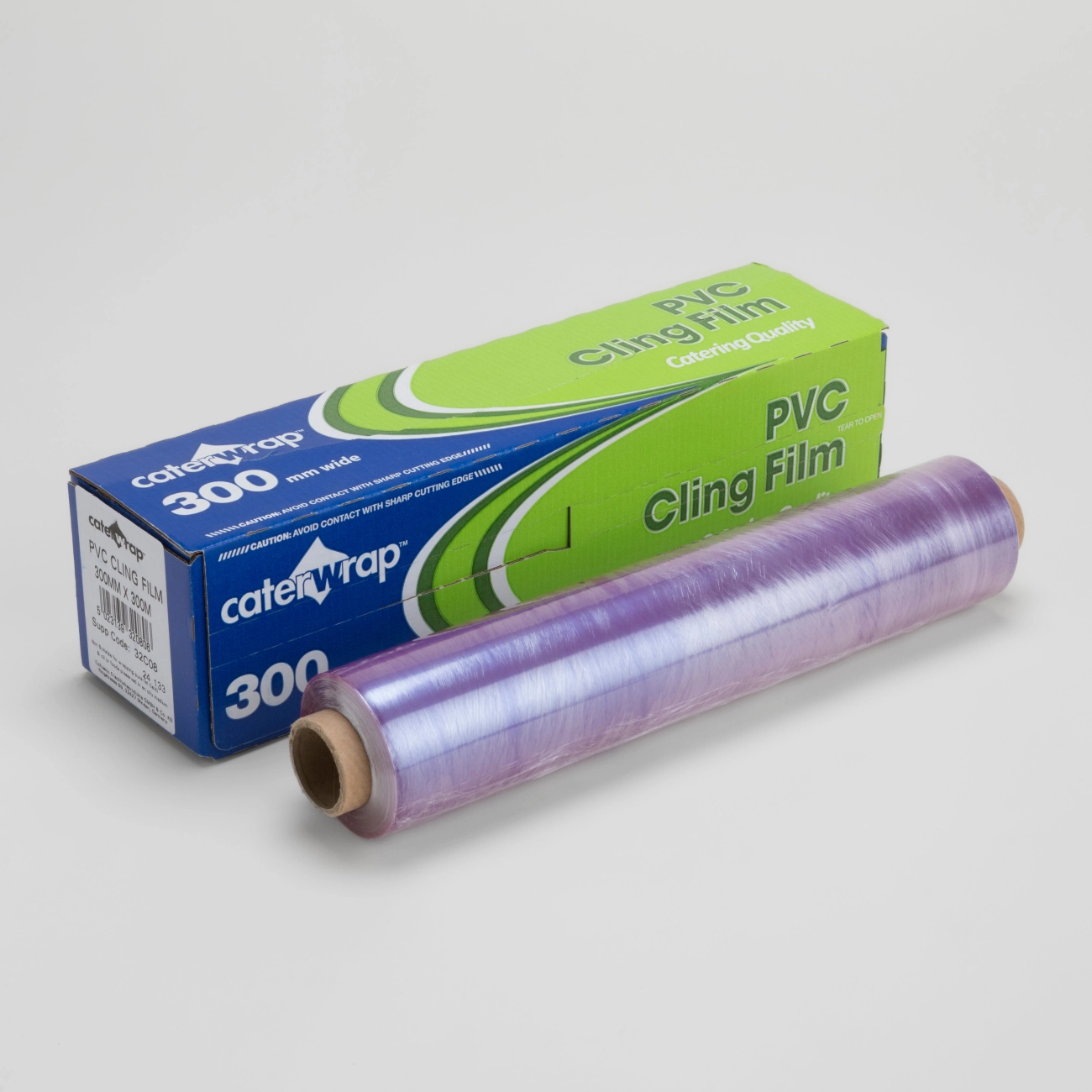
Why Household Cling Film Fails in Professional Bakeries
Household plastic wrap is designed for a home fridge, not a busy bake shop. In a professional bakery, it almost always costs you more in waste, time, and frustration than it saves.
1. It can’t handle bakery temperature swings.
Your trays and racks move constantly between:
- Hot kitchen benches and cooling racks
- Proofers with high humidity
- Walk-in fridges and freezers
Regular cling film loses its cling when it’s cold, goes loose and baggy when it’s warm, and can become brittle or tear as dough rises under it. That means exposed dough, dry crusts, and inconsistent proofing.
2. Humidity destroys cheap film performance.
In a pro environment you’ve got steam ovens, proofing cabinets, and open sinks. Standard wrap is:
- Prone to fogging in humid display fridges, hiding your products
- Likely to sweat and drip on delicate pastries and cakes
- More likely to slip off metal trays when condensation forms
Without bakery-grade anti-fog and proper elasticity, your croissants, cakes, and dough don’t stay protected or appetizing.
3. Speed and workflow expose its weaknesses.
In service, your team needs to:
- Tear film quickly with one hand
- Wrap full-size sheet pans and 18″ x 26″ trays in seconds
- Move fast without fighting tangles and breaks
Domestic rolls are too short, too narrow, and too fragile. You lose time restarting wraps, unrolling wasted film, and re-covering trays that didn’t seal properly.
4. Cheap film looks low-quality on premium products.
Thin, cloudy film makes high-end bakery products look less fresh and less valuable. Poor clarity and weak cling can lead to:
- Smudged icing and damaged decorations
- Wrinkled, messy presentation on cakes and gateaux
- Customers doubting freshness because they can’t see detail clearly
For retail bakeries, packaging is part of the product. Household wrap simply isn’t made for display.
5. The “cheap roll” actually costs you more.
On paper, supermarket wrap looks cheaper. In reality, you pay more through:
- Higher usage: more wraps per tray because of poor cling
- Frequent tearing: wasted meters every time it snaps at the cutter edge
- Product waste: dried-out dough, oxidized fillings, damaged toppings
In a commercial bakery, a film that doesn’t tear, doesn’t fog, and actually clings is the real cost saver. That’s why we only specify professional PE food wrap for our bakery clients, not household-grade cling film.
Key Specs for Bakery-Grade Cling Film
If you’re running a serious bakery, your cling film needs to match your pace. Here’s what I always look at when we spec bakery cling film for pro kitchens.
Material: 100% Virgin LDPE vs. Recycled
- 100% virgin LDPE (low-density polyethylene)
- Best clarity for cakes, croissants, and display trays
- Consistent food-contact safety
- Stronger and more elastic at the same thickness
- Recycled or mixed PE
- Better for some back‑of‑house uses, but usually not ideal for direct food contact
- Can be duller and less clear
- Thickness and strength can be inconsistent
For direct contact with dough, pastries, and cakes, I stick with 100% virgin LDPE food-grade plastic wrap that complies with FDA and EU food rules.
Thickness Guide: 8–15 Micron
| Thickness | Best Use Case |
|---|---|
| 8–9 μm | Light covers, proofing trays, quick wraps |
| 10–12 μm | Daily bakery use, croissants, cakes, display pans |
| 13–15 μm | Transport, stacked trays, heavy/greasy products |
- Thinner (8–9 μm): cheaper per roll, but tears easier if staff pull fast.
- Mid (10–12 μm): best balance for most U.S. bakeries.
- Thicker (13–15 μm): ideal “cling film that doesn’t tear” when you’re wrapping tall cakes or stacked product.
Width Options: 30 cm, 45 cm, 60 cm
| Width | Typical U.S. Use |
|---|---|
| 30 cm (12″) | Small trays, loaf tins, dessert cups |
| 45 cm (18″) | Standard sheet pans, most work tables |
| 60 cm (24″) | Full-size racks, large boards, bulk trays |
Most professional kitchens lean on cling film 45 cm x 1500 m as their main workhorse.
Roll Length: 300 m, 600 m, 1500 m
| Roll Length | Who It Fits | Notes |
|---|---|---|
| 300 m | Small bakeries, test kitchens | Less upfront cost |
| 600 m | Busy retail bakeries | Good balance, fewer changeovers |
| 1500 m | High-volume / industrial plants | Best cost per meter, less downtime |
Longer rolls = lower cost per meter and fewer roll changes, which matters when your team is wrapping all day.
Anti-Fog Bakery Cling Film
For bakery cling film anti fog, the coating keeps condensation from turning into ugly droplets when you move product from hot to cold:
- Keeps pastries and cakes clear in display fridges
- Essential for anti-fog film for pastry display and refrigerated cake cases
- Helps sell more product because everything actually looks fresh
If you’re already working on greener packaging, it’s worth looking at how anti-fog films fit alongside more sustainable food storage options like the ones we break down in our overview of the best food storage bags for food businesses.
Elasticity & Cling Strength
- High elasticity cling film stretches over proofing dough and tall cakes without tearing
- Strong cling means:
- Tight seal around trays and boards
- Less air, less drying out, fewer off-flavors
- In a fast bakery, better stretch = less film used per wrap
Microwave-Safe & Freezer-Safe Certifications
Always check that your professional PE food wrap is certified:
- BRC / GFSI-compliant plant (production quality)
- FDA food-contact compliant for the U.S.
- EU 10/2011 compliant for export and international brands
- Labeled microwave-safe cling film and freezer-safe cling film for dough, par-baked items, and reheating
For U.S. bakeries that care about both performance and footprint, I also keep an eye on the newest sustainable cling film for bakeries 2026, which we track in our updates on eco-friendly food storage materials for OEM/ODM partners.
Artfullife® Bakery Cling Film Range – Built for Pros
We design our Artfullife® bakery cling film specifically for fast-paced U.S. bakeries, not home kitchens. Every roll is food-grade PE, high clarity, and made to survive hot kitchens, cold rooms, and long display hours.
Quick Comparison – 3 Most Popular Bakery SKUs
| SKU / Use Case | Size (W × L) | Thickness | Key Features | Best For |
|---|---|---|---|---|
| AF-45×1500 Pro Line | 45 cm × 1500 m | 12 μm | High elasticity, strong cling, cutter-box | Daily bakery use, trays, racks, dough |
| AF-30×600 Cake & Pastry | 30 cm × 600 m | 10 μm | Extra clarity, soft stretch, anti-fog option | Cakes, pastries, countertop wrapping |
| AF-60×1500 Industrial Plant Grade | 60 cm × 1500 m | 13–15 μm | Heavy-duty, wide format, freezer-safe | Sheet pans, industrial lines, bulk trays |
All SKUs are microwave-safe and freezer-safe, and can be matched to the same food-storage standards we apply across our commercial food protection products.
Real Bakery Feedback From the Field
Croissant shop, Chicago, IL
“Our morning rush is crazy. The 45 cm × 1500 m roll lets us wrap full sheet pans of croissants fast without tearing. Cling is strong enough that
Pro Usage Tips from 20+ Years Supplying Bakeries
Covering Proofing Dough Without Sticking
For proofing dough, the right bakery cling film makes a big difference:
- Lightly oil the bowl or tray rim, not the dough.
- Stretch the professional PE food wrap tight so it’s drum-flat over the container.
- Leave a bit of slack in the center so the dough can rise without the film touching it.
- In walk-in coolers, use 10–12 micron freezer-safe cling film so it won’t lose cling on cold metal trays.
Wrapping Delicate Cakes & Gateaux for Transport
To protect finishes, frosting, and decorations:
- Chill cakes briefly so the surface firms up before wrapping.
- Use high elasticity cling film and wrap in wide, loose loops first, then tighten on the second layer.
- For tall cakes, wrap top to bottom in overlapping bands so nothing shifts during delivery.
- Always use clear plastic wrap for cakes so drivers can inspect without unwrapping.
Keeping Display Trays Fog-Free All Day
For pastry and croissant displays, bakery cling film anti fog is key:
- Choose anti-fog film for pastry display so condensation spreads into a clear sheet instead of droplets.
- Wrap trays tight, then pierce one or two tiny vent holes at the back, away from customers.
- Keep the display case at a stable temperature to reduce fogging and dripping inside the wrap.
Quick-Tear Techniques: Cutter Box vs Slide Cutter
Speed matters in a busy bakery:
- Cutter box 45 cm (18″) is ideal for quick tray wraps—pull the film tight, press down, and tear in one motion.
- A slide cutter is better for very thin film or long 60 cm sheets—smooth pull, then slide once for a clean edge.
- Keep the edge always accessible: when you finish tearing, fold 2–3 cm of film back over the roll for the next grab.
How to Use 30% Less Film With Good Technique
Most shops overuse film without realizing it:
- Size correctly: don’t use 45 cm x 1500 m film for a job a 30 cm roll could handle.
- Stretch the film’s elasticity instead of adding extra layers—one tight wrap beats three loose wraps.
- Wrap trays diagonally so corners are sealed with less overlap.
- Train staff on standard lengths for common jobs (e.g., one pull for loaf pans, two for full sheet trays).
Storing Rolls to Prevent Tunneling and Deformation
To avoid the “tunnel effect” and off-center cores:
- Store rolls horizontally on a flat shelf, not standing up.
- Keep them away from ovens, proofer doors, and sunny windows—heat warps cores and film.
- Don’t stack heavy boxes on top of each other; use racks or shelves so rolls don’t crush.
- Rotate stock—use older rolls first so they don’t sit under pressure for months.
If you’re shipping film to multiple bakery locations, my team can also help with logistics planning and export support for cling film so every store stays stocked with the same performance wrap across the country, similar to how we structure our global cling film supply and logistics support.
Common Bakery Cling Film Problems & How to Fix Them
1. Film fogging in display fridges
If your croissants and cakes cloud up behind the wrap, it’s a film issue, not your fridge.
Fix it:
- Switch to bakery cling film anti fog (anti-fog PE formula)
- Anti-fog moves condensation into a clear water layer instead of droplets
- Essential for pastry display, cold cases, and grab-and-go shelves
2. Film tears when you pull or stretch it
Cheap or thin film slows the whole line down and wastes product.
Fix it:
- Use 8–10 micron for light covers (resting dough, trays)
- Use 12–15 micron for cake boards, heavy pans, and transport
- Choose high elasticity cling film so it stretches instead of splitting
- Pair with a solid cling film cutter box 45cm or slide cutter to get clean cuts
3. Film loses cling in the walk-in or freezer
Standard household wrap often goes stiff and stops sticking once it’s cold.
Fix it:
- Use freezer safe cling film for dough with a low-temperature PE formula
- Check for microwave safe cling film bakery and freezer-safe icons on the box
- For blast freezers, go one step thicker (12–15 micron) to handle the shock
4. Film sticks to itself in a hot kitchen
Summer rush, deck ovens blasting, and suddenly your wrap is a tangled ball.
Fix it:
- Choose professional PE food wrap with anti-block additives so layers separate easily
- Store rolls away from direct heat and steam (not on top of ovens or proofers)
- Use a dispenser or cutter box to keep tension consistent and prevent over-stretching
If you’re also stocking bags and side wraps, our guide to types of food storage bag closures and OEM cost can help you match films and bags to your bakery setup: types of food storage bag closures and OEM cost guide.
Sustainability Update 2026 – Oxo‑Degradable vs Recyclable PE for Bakeries
If you run a bakery in the U.S. today, “sustainable cling film” usually means one thing: recyclable PE, not oxo‑degradable.
Oxo‑Degradable vs Recyclable PE (Quick View)
| Option | What It Is | Main Issues for Bakeries | Our Pick |
|---|---|---|---|
| Oxo‑degradable film | PE with additives that make it fragment faster | Microplastics, not accepted in most recycling, confusing claims | ❌ No |
| Recyclable PE film | Clean LDPE / PE that can go into PE recycling | Needs clean waste stream, clear labeling | ✅ Yes |
Why We Don’t Push Oxo‑Degradable
Oxo‑degradable sounds green, but in practice:
- It breaks into microplastics, not true compost.
- It’s rejected by most U.S. recyclers and banned or discouraged in many regions.
- It can mess up existing PE recycling streams.
For a bakery that cares about brand reputation and compliance, it’s more risk than reward.
What Actually Works in Bakeries Right Now
For professional bakeries, we focus on:
- Recyclable LDPE cling film
- Clearly marked as #4 LDPE for store drop‑off programs where available.
- Made from 100% virgin PE for direct food contact and clarity.
- Use less plastic per job
- Right micron, better cling, and correct width so you’re not double‑wrapping trays and pans.
- Educate your team
- Train staff to avoid over‑pulling and to use cutter boxes properly so every roll covers more product.
Here’s how we think about sustainability in a bakery:
- Food waste first: Film that keeps bread, croissants, and cakes fresh longer often saves more carbon than it costs.
- Recyclable materials: Stick with films that fit into existing PE streams wherever possible.
- Efficiency: Better film + better technique = fewer rolls used per month.
If you’re also using other food‑contact disposables, pairing recyclable cling film with long‑life items like reusable insulated lunch boxes for staff meals can help you further cut throwaways across the kitchen.
Frequently Asked Questions About Bakery Cling Film (FAQ)
What thickness is best for daily bakery use?
For most U.S. bakeries, this is what works best in real life:
- 8–10 micron PE cling film – Light, cost‑effective choice for:
- Covering proofing trays and dough tubs
- Short-term storage in the walk‑in
- 10–12 micron – The “daily driver” for:
- Wrapping croissants, pastries, and sheet pans
- General prep in a busy kitchen
- 12–15 micron – Heavy-duty choice for:
- Transporting cakes
Ready to Upgrade Your Bakery Cling Film?
If you’re tired of film that tears, fogs up your display case, or won’t cling in the walk-in, it’s time to switch to professional Artfullife® bakery cling film.
We supply bakery-grade **anti-f