
















If you’re still using “any old plastic wrap” for your vegetables, you’re leaving money, freshness, and sustainability on the table.
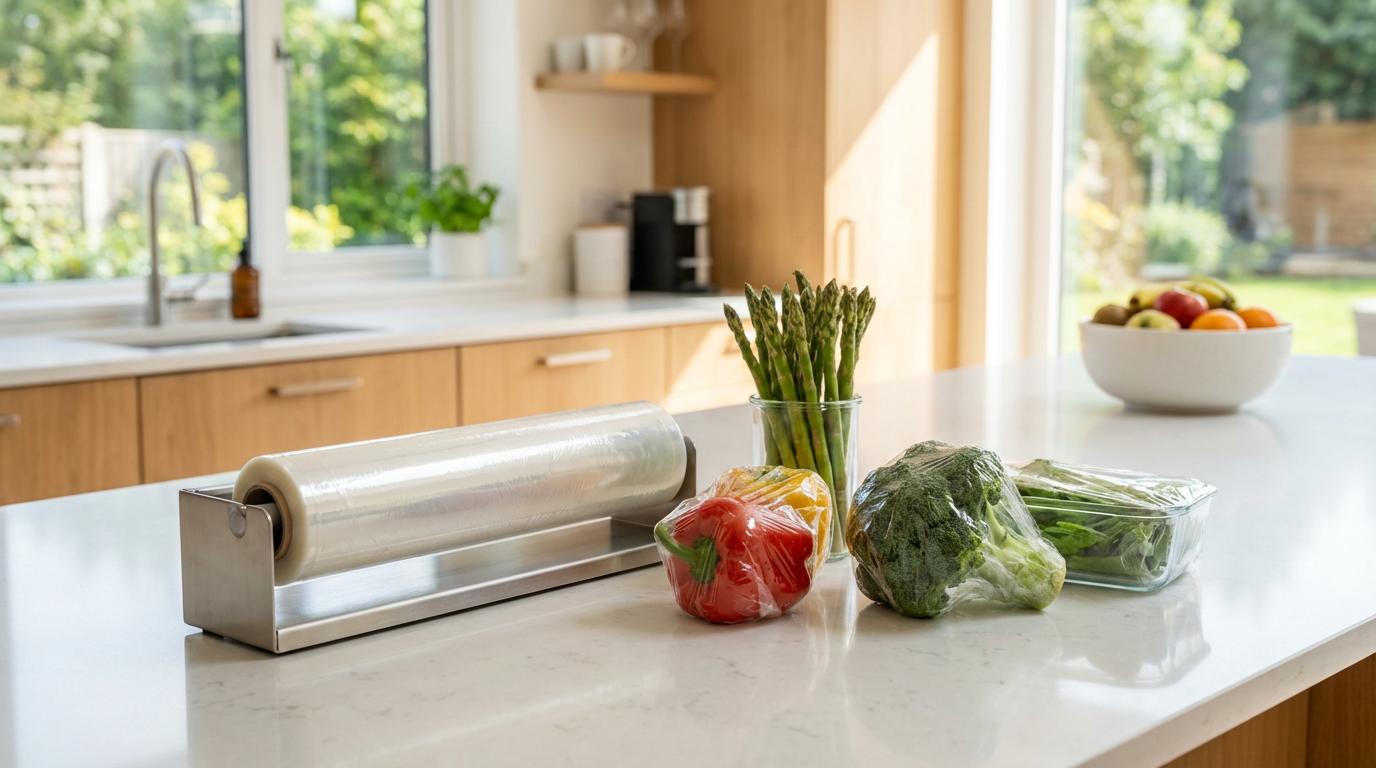
The truth is: the cling film for vegetable packaging you choose can make or break your produce. The right vegetable wrapping film keeps greens crisp, cucumbers firm, and herbs vibrant longer—while cutting waste and creating cleaner, more professional displays at home or in supermarkets.
But now there’s a new challenge:
How do you balance freshness, food safety, and eco-friendly vegetable packaging?
That’s exactly what this guide is about.
You’ll see how different films (PVC, PE cling film for vegetables, and biodegradable food wrap) actually perform, what thickness and features (like anti-fog food film and breathability) you really need, and how Artfullife® is redefining sustainable produce wrap with plant-based, compostable cling wrap that still delivers premium shelf life.
If you want your vegetables to stay fresh longer—and your packaging to be kinder to the planet—keep reading.
Why Cling Film Is Essential for Vegetable Packaging
Fresh vegetables lose quality fast once they’re exposed to air, moisture loss, and handling. Cling film for vegetable packaging gives you a simple, low-cost way to slow that process down and protect every batch from farm to table.
How Cling Film Protects Fresh Vegetables
A good vegetable wrapping film creates a light, flexible barrier around the produce:
- Shields from air and oxidation – reduces exposure to oxygen so color, crunch, and nutrients last longer.
- Limits moisture loss – slows dehydration and wilting, especially for leafy greens and herbs.
- Blocks dust and contaminants – keeps soil, microbes, and dirt off the surface during transport and display.
- Reduces handling damage – packed vegetables stay in place on trays or in crates, cutting bruises and waste.
Key Freshness Benefits
When you use fresh produce cling film correctly, you see immediate results:
- Longer shelf life – more saleable days on the shelf and less shrink for supermarkets and growers.
- Less wilting and shriveling – lettuce, cucumbers, peppers, and tomatoes stay firm and appealing.
- Better texture and nutrients – slower vitamin loss and crisper bite for longer.
- Improved appearance – clear, anti-fog film keeps produce visible and attractive in the chiller.
Typical Use Cases for Vegetable Wrapping Film
We design food-grade stretch film to work across the whole supply chain:
- Supermarket vegetable wrapping – cling film over foam or PET trays for cucumbers, tomatoes, peppers, greens.
- Home vegetable storage wrap – covering cut vegetables, half-used peppers, herbs, and salad bowls in the fridge.
- Transport and bulk packing – bundling bunches, securing crates, and protecting cartons on pallets.
- Foodservice and prep kitchens – holding prepped vegetables fresh and safe during short-term storage.
Used properly, cling film for fresh produce cuts waste, keeps vegetables market-ready longer, and supports both quality and food safety at every stage.
Types of Cling Film for Vegetable Packaging
PVC cling film for vegetables
PVC cling film is still widely used for supermarket vegetable wrapping because it:
- Has very strong cling, so it hugs trays and loose vegetables tightly
- Offers good breathability, helping fresh produce “breathe” and reduce excess condensation
- Gives high gloss and transparency, making vegetables look fresher on display
You’ll see PVC vegetable wrapping film mostly on:
- Supermarket trays (tomatoes, peppers, cucumbers, herbs)
- In-store manual wrapping stations where staff need quick, tight wraps
The downside: PVC is under more regulatory and health scrutiny in many markets, especially for long contact with high‑fat foods and for high‑temperature use.
PE cling film for vegetables
PE (polyethylene) cling film is the go-to for many global brands because it’s:
- Food-safe and non-toxic, with fewer plasticizer concerns
- Durable and tear-resistant, ideal for packing lines and transport
- More chemically stable, suitable for a wider range of vegetables and conditions
Why many buyers prefer PE cling film for vegetables:
- Better alignment with food safety standards in Europe, North America, and other strict markets
- Easier to integrate into recyclable food packaging film systems
- More suitable for biodegradable and plant-based cling film developments
Key performance features for fresh produce cling film
When I design or select vegetable wrapping film, I focus on:
-
Cling strength
- Must seal well on itself and on trays
- No constant unrolling or peeling issues on wrapping machines
-
Transparency & gloss
- Clear film sells produce; dull or cloudy film kills shelf appeal
- High clarity is critical for supermarket vegetable wrapping
-
Anti-fog performance
- Prevents water droplets forming inside the film
- Keeps vegetables visible in chilled cabinets and cold chains
- A must for leafy greens, herbs, and tray-packed produce
-
Microwave & freezer safety
- Many global customers expect microwave-safe cling film for reheating
- Freezer compatibility reduces brittleness and cracking at low temperatures
If you export cling film or run multi-country retail, you also need strong logistics and supply chain support. That’s why we build our cling film offer around stable global shipping and documentation, similar to how we manage global supply chain logistics support for cling film export.
PVC vs PE vs other plastic vegetable films
PVC cling film
- Pros: Excellent stretch, strong cling, great clarity, good breathability
- Cons: Stricter regulations in many regions; not ideal for high heat; more health and environmental concerns
PE cling film
- Pros: Safer image, recyclable in some streams, strong and durable, better for eco-friendly vegetable packaging strategies
- Cons: Historically less cling and clarity than PVC, though modern formulations (including our own) have closed this gap a lot
Other films (PLA, bio-based, specialty blends)
- Pros: Can be compostable or plant-based, ideal for brands pushing sustainable produce wrap
- Cons: Higher cost, tighter storage and shelf-life conditions, not always compatible with all machines or climates
In real-world vegetable packaging, most buyers now lean toward PE and bio-based options to balance:
- Food safety and health
- Machine and hand-wrapping performance
- Sustainability targets and retailer requirements
Key Specs When Choosing Cling Film for Vegetable Packaging

When I choose cling film for vegetable packaging, I always start from specs, not price. The right film keeps produce fresh, reduces waste, and runs smoothly on packing lines.
Ideal Cling Film Thickness for Vegetables (8–15 Microns)
For vegetable wrapping film, 8–15 microns is the sweet spot:
- 8–10 microns
- Good for: light items – leafy greens, herbs, soft tomatoes
- Benefits: great stretch, low cost, easy hand wrapping
- 10–12 microns
- Good for: mixed vegetables on trays – cucumbers, peppers, zucchini
- Benefits: better puncture resistance, cleaner sealing
- 12–15 microns
- Good for: heavier or sharp edges – root vegetables, bulk packs
- Benefits: stronger, more secure for transport, stable on machines
Thinner isn’t always better. Go too thin and you get tears, rewraps, and more waste.
Breathability & Oxygen Transmission
Fresh produce cling film must “breathe”:
- Breathable vegetable film allows some oxygen and CO₂ exchange so vegetables don’t “sweat” or spoil fast.
- Too tight / low breathability → condensation, mold, off-odors.
- Too open / high breathability → wilting, dehydration, soft texture.
For vegetables with high respiration (leafy greens, herbs), I prefer films with higher oxygen transmission and good anti-fog to keep visibility clear.
Match the Film to the Vegetable Type
Not all vegetables want the same environment. As a rule of thumb:
- Leafy greens & herbs
- Need: breathable, anti-fog film, 8–12 microns
- Goal: avoid condensation, keep crisp, avoid yellowing
- Cucumbers & zucchini
- Need: moderate breathability, 10–12 microns
- Goal: prevent dehydration and shriveling
- Tomatoes & peppers
- Need: good clarity, strong cling, 10–12 microns
- Goal: protect skin, show color, avoid sweating
- Root vegetables (carrots, potatoes, beets)
- Need: higher strength, 12–15 microns, good puncture resistance
- Goal: survive transport and stacking without tearing the film
If you’re also working with reusable options like produce bags or silicone storage, it helps to align specs with your broader eco-friendly food packaging solutions.
Packaging Formats: Hand Rolls, Machine Rolls, Pre‑Cut Sheets
I usually set up formats based on who’s using the film:
- Hand rolls
- For: small supermarkets, wet markets, home users
- Features: lightweight cores, easy tear, standard widths (30–45 cm)
- Jumbo machine rolls (machine wrap film for vegetables)
- For: large supermarkets, packing houses, farms
- Features: long length, consistent tension, stable for automatic stretch wrapping
- Pre‑cut sheets
- For: high-speed tray wrapping, standard produce SKUs
- Features: fixed size, faster operation, less waste on line
What Different Users Should Look For
Supermarkets / Retail Chains
- High transparency and anti-fog food film to display freshness
- Stable cling strength and roll quality for manual and automatic wrapping
- Food-grade, non-toxic produce cling film with test reports
- Consistent thickness (8–15 microns depending on category)
Farms / Packing Houses
- Strong, durable film for transport and bulk packing
- Good performance on high-speed machines, low breakage
- Flexible specs by crop: leafy vs root vs fruiting vegetables
- Options for recyclable food packaging film or compostable grades, depending on sustainability targets
Home Users
- Safe, food-grade stretch film that’s easy to cut and doesn’t tangle
- Thickness around 8–12 microns for everyday vegetable storage wrap
- Microwave and freezer safe (clearly labeled)
- Preferably an eco-friendly vegetable packaging option, like biodegradable food wrap or plant-based cling film
When these specs line up with your actual vegetables and workflow, you get longer shelf life, less waste, and smoother operations from farm to supermarket to home.
Eco-Friendly Cling Film Options for Vegetables

Environmental impact of traditional vegetable wrapping film
Conventional PVC and PE cling film for fresh produce is cheap and effective, but it comes with a cost:
- Made from fossil fuels and not designed to break down fast
- Often too thin/contaminated with food to be recycled in most regions
- Can generate microplastics when it degrades in the environment
- Puts pressure on brands as regulations and retailer standards get tighter
For supermarkets, growers, and packaging distributors, staying with standard plastic wrap only gets riskier every year.
Biodegradable vs compostable cling wrap – what it really means
| Term | What it means in real life | What to watch for |
|---|---|---|
| Biodegradable | Breaks down into natural elements under microbes, heat, moisture | No clear time limit unless certified |
| Compostable | Breaks down into CO₂, water, biomass with no toxic residue | Look for EN 13432 / ASTM D6400 certifications |
| Home compostable | Breaks down in a backyard compost at lower temperatures | Stricter and more consumer‑friendly |
A legit biodegradable food wrap or compostable cling wrap should have third‑party certifications, similar to how food bags require strict US/EU food-grade certifications.
Plant-based cling film for fresh produce
Plant-based cling film (PLA, PBAT blends, starch-based, etc.) is designed as a breathable vegetable film that behaves like classic stretch film but comes from renewable sources.
Performance on vegetables:
- Good clarity for shelf display
- Stable stretch and cling on trays and whole vegetables
- Decent gas exchange, helping avoid condensation and mold on leafy greens
- Works well as supermarket vegetable wrapping and for home vegetable storage wrap
Not all plant-based films are equal, so we focus on blends that balance clarity, anti-fog, and tensile strength with realistic composting conditions.
Recyclable vs biodegradable vs compostable vegetable packaging film
| Type of film | Pros | Cons / limits | Best use case |
|---|---|---|---|
| Recyclable PE cling film | Familiar, strong, widely used, food-safe | Hard to recycle when food-contaminated | High-speed machine wrap film for vegetables |
| Biodegradable cling film | Reduces long-term plastic pollution | Needs correct environment to break down | Retail packs where disposal is mixed |
| Compostable vegetable packaging film | Designed to return to compost, often plant-based | Needs access to industrial/home composting | Eco-friendly vegetable packaging programs |
For global customers, I normally recommend:
- Recyclable PE where recycling streams are strong
- Certified compostable / biodegradable cling film rolls where brands are pushed to hit sustainability and waste-diversion targets
The key is matching your film choice to local waste systems, retailer standards, and the expectations of your end customer.
Biodegradable Cling Film from Artfullife®

Core features of Artfullife® biodegradable cling film for vegetables
I design our Artfullife® biodegradable cling film for vegetables to perform like top-grade PE wrap, but with a cleaner end-of-life. Key points:
- Biodegradable & non-toxic: Breaks down under proper composting conditions, no heavy metals or harmful plasticizers.
- Food-grade & odorless: Safe for direct contact with fresh produce, no plastic smell, no transfer of taste.
- High clarity & anti-fog: Clear display of vegetables on shelf, with anti-fog performance that keeps packs looking fresh and premium.
- Strong stretch & cling: Tight wrapping on trays or loose vegetables without constant tearing.
For detailed film behavior (tensile, sealing, fog resistance), I follow similar testing standards to the ones in our cling film performance and technical specifications guide.
Shelf-life and freshness without harmful additives
I focus on shelf life without relying on risky additives:
- Optimized breathability helps reduce condensation and keeps leafy greens from “sweating”.
- Moisture retention slows wilting and shrink, especially for herbs, lettuce, and cucumbers.
- No controversial plasticizers (like common PVC additives), so you get freshness with a cleaner ingredient list.
You get the same or better shelf performance as conventional fresh produce cling film, but in a more responsible way.
Stretch, sealing, and anti-fog on different vegetables
Our biodegradable vegetable wrapping film is tuned for everyday produce lines:
- High stretch & elastic memory: Hugs trays of tomatoes, peppers, and cucumbers tightly, reducing air pockets.
- Reliable sealing: Works on both hand wrapping and automatic machine wrap film setups, with stable sealing windows.
- Consistent anti-fog: Keeps packs clear in chilled cabinets for items like cherry tomatoes, mixed peppers, and cut veg.
In practice, it behaves like a strong PE cling film for vegetables, but with a greener profile.
Support for supermarkets, growers, and eco-conscious households
I build this range for three main user groups:
- Supermarkets & packhouses: Jumbo rolls for high-speed vegetable tray wrapping film, stable unwinding, low breakage, clean printability for labels.
- Growers & exporters: Breathable vegetable film that protects quality during transport while meeting retailer sustainability demands.
- Households: Smaller biodegradable cling film rolls for home vegetable storage wrap—easy cut, strong cling, safe for fridge and freezer use (within stated limits).
We customize width, core size, and roll length to match regional equipment and workflow.
Helping brands hit sustainability targets
Switching to Artfullife® compostable vegetable packaging film is an easy win for ESG reporting:
- Lower plastic footprint compared with conventional PVC cling film for vegetables.
- Fits into eco-friendly food packaging solutions, alongside recyclable trays and paper labels.
- Helps brands communicate sustainable produce wrap stories clearly to consumers and retailers.
In short, you keep the performance of a professional food-grade stretch film while moving your vegetable packaging line toward real, measurable sustainability.
How to Use Cling Film for Vegetable Packaging

Basic wrapping techniques (whole & cut vegetables)
For whole vegetables (cucumbers, peppers, tomatoes, zucchini):
- Keep the surface dry before wrapping.
- Wrap with light tension so the cling film is snug but not crushing.
- Overlap 2–3 cm on each turn to keep an airtight seal.
- Twist or fold the film on the base to lock it in.
For cut vegetables (cut peppers, half cucumbers, chopped carrots):
- Always wrap the cut side first to reduce oxidation.
- Press the film gently onto the cut surface, then wrap around the rest.
- Double-layer on very juicy vegetables (like cut tomatoes) to prevent leaks.
- For ready‑to‑cook mixes, use a tray or container and stretch film tight over the top.
Pairing cling film with trays, containers, and labels
In supermarkets and farm shops:
- Use vegetable tray wrapping film with EPS/PET/PP trays.
- Make sure the film has good anti-fog so produce stays visible in chillers.
- Keep the film tight across the tray rim to avoid “ballooning” in cold storage.
- Apply labels only on the double-layered film area to stop tearing.
At home:
- Cover glass or stainless containers with food-grade stretch film instead of loose bags.
- For leafy greens, line the container with a paper towel, add the greens, then seal with cling film.
For larger catering jobs and produce prep, large-format cling film rolls are ideal; we cover that in more depth in our guide to large cling film rolls for catering and events.
Manual vs automatic vegetable wrapping
Manual wrapping (hand rolls):
- Best for small stores, home kitchens, and flexible SKUs.
- Use cutter boxes or slide-cut rolls to keep edges neat.
- Train staff to pull with consistent tension so every pack looks the same.
Automatic & semi-auto machines:
- Use machine wrap film for vegetables on jumbo rolls (usually higher stretch).
- Match film thickness and cling strength to machine settings to avoid breaks.
- Check temperature on hot plates or sealing bars to prevent film burn or weak seals.
- For high-humidity vegetables, pick breathable vegetable film to reduce condensation.
Storage tips to extend vegetable lifespan
To keep vegetables fresh longer in-store and at home:
- Always chill wrapped vegetables quickly after packing.
- Avoid stacking too high; pressure damages produce and traps moisture.
- Don’t wrap wet vegetables—pat dry first to limit mold.
- Keep cut and wrapped vegetables in the coldest, stable zone of the fridge.
- Rotate stock: first in, first out to avoid hidden spoilage.
Best ways to wrap common vegetables
-
Lettuce & leafy greens (spinach, kale, Asian greens):
- Wash, dry thoroughly, place in a shallow tray or container with a paper towel.
- Wrap with breathable cling film, leaving a tiny vent at one corner or using micro-perforated film to avoid sogginess.
-
Cucumbers:
- Wrap each cucumber tightly from end to end, sealing the tips.
- Use thin, high‑stretch film to reduce weight and cost while still stopping moisture loss.
-
Tomatoes:
- Place in trays in a single layer, stem side down.
- Use soft tension when wrapping to avoid bruising, and choose anti-fog food film for shelf appeal.
-
Herbs (cilantro, parsley, dill, chives):
- Trim stems, wrap loosely in a dry paper towel, then place on a shallow tray.
- Cover with cling film but allow a bit of air exchange (small vent or breathable film) to prevent condensation.
-
Leafy packs & mixed salads:
- Use low‑tension wrapping over trays or bowls to maintain volume.
- Anti-fog and clear fresh produce cling film is key for visibility and freshness.
Used right, cling film for fresh produce gives you longer shelf life, better color, and less waste—whether you’re a supermarket, grower, or just stocking your home fridge.
FAQ on Cling Film for Vegetable Packaging
Is biodegradable cling film as effective as standard plastic for vegetables?
Yes, when it’s well formulated. A good biodegradable cling film for vegetables should deliver:
- Strong cling & stretch to seal out excess air
- Anti-fog performance so trays stay clear in chilled cabinets
- Breathability to slow wilting while avoiding condensation
- Food-grade safety with no harmful plasticizers
Our biodegradable vegetable wrapping film is engineered to match (and often beat) standard PE film on freshness and clarity, without the long-term pollution.
What cling film thickness works best for different vegetable types?
For cling film thickness for vegetables, this is a simple rule of thumb:
- 8–10 microns
- Lightweight, cost-effective
- Best for: leafy greens, herbs, salad mixes
- 10–12 microns
- General-purpose supermarket vegetable wrapping
- Best for: cucumbers, peppers, tomatoes, zucchini
- 12–15 microns
- Extra strength for heavy or bulk packs
- Best for: root vegetables, large tray packs, transport wrapping
Thinner isn’t always better—too thin and you get tearing, poor sealing, and faster dehydration.
Can cling film for vegetables be used in microwaves or freezers safely?
It depends on the material and certification:
- Microwave
- Use only microwave-safe food-grade stretch film
- Keep film from touching the food surface where possible
- Avoid high-fat, high-temperature cooking under film
- Freezer
- Choose film rated for freezer-safe vegetable storage
- Look for PE or certified biodegradable films that resist cracking at low temps
Always check the supplier’s temperature range and compliance documents before using in hot or frozen conditions.
How does biodegradable cling film compare with reusable containers and wraps?
Each has a different role:
- Biodegradable food wrap / compostable cling wrap
- Best for: retail trays, bulk packing, machine wrap film for vegetables
- Delivers tight seal, anti-fog, and high-speed packing
- Reusable containers & wraps
- Best for: home leftovers, small portions, long-term fridge storage
- Lower waste per use, but not practical for high-volume supermarket vegetable wrapping
Most of our retail and farm clients run a hybrid approach: biodegradable cling film on the supply chain side, reusable containers at home.
How to source reliable, food-grade, eco-friendly cling film for vegetable packaging?
When you choose a fresh produce cling film supplier, lock in these points:
- Food-grade & safety
- EU / FDA compliant, migration tests, no toxic plasticizers
- Material clarity
- Clear whether it’s PE, biodegradable, compostable, or recyclable film
- Performance data
- Oxygen transmission, anti-fog rating, stretch, and seal strength
- Format options
- Hand rolls, machine rolls, pre-cut sheets, supermarket vegetable tray wrapping film
- Sustainability proof
- Certifications for compostability or recyclability, plus real end-of-life options in your country
- Stable supply & pricing
- Especially important for supermarkets and farms scaling eco-friendly vegetable packaging
If you’re comparing costs and performance with traditional films, it helps to look at total packaging efficiency and waste reduction, not just roll price—this is exactly what we break down in our article on the cost-effectiveness of preservative film vs traditional packaging at ecoartfullife.com.