















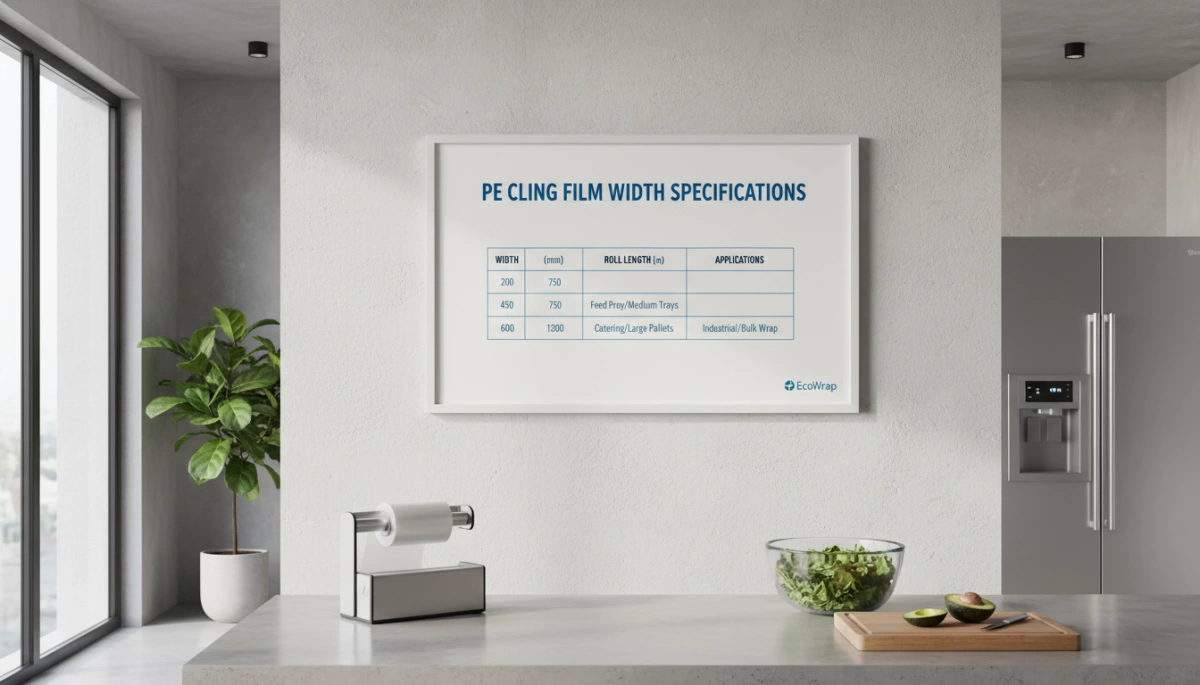
If you’ve ever unrolled PE cling film and thought, “Why is this either way too wide or way too narrow?”, you’re not alone.
Choosing the right PE cling film width is the difference between clean, efficient wrapping and constant waste, torn film, and ill‑fitting covers. And if you’re matching rolls to dispensers, GN pans, wrapping machines, or retail shelves, the wrong width isn’t just annoying—it costs time and money.
In this guide, you’ll get a clear PE Cling Film Width Specification Chart that breaks down:
- Standard widths from home use (20–30 cm) to commercial (45–60 cm and beyond)
- How width, thickness, and roll length work together in real kitchens
- Which sizes fit bowls, trays, GN pans, and wrapping machines
- How to pick eco-friendly, recyclable, and biodegradable PE cling film without sacrificing performance
You’ll also see how brands like Artfullife® keep familiar, industry‑standard widths while offering sustainable PE cling film options that are safe, microwave‑friendly, and better for the environment.
Let’s get straight into the widths, the chart, and the exact specs you need to choose the right roll the first time.
Understanding PE Cling Film Basics
When buyers and kitchen teams compare PE cling film widths and sizes, they usually worry about three things: safety, performance, and waste. Let’s quickly lock in the basics so you know when polyethylene food wrap is the right choice.
PE vs. PVC Cling Film: Key Differences
| Feature | PE Cling Film (Polyethylene) | PVC Cling Film (Polyvinyl Chloride) |
|---|---|---|
| Food Safety | No plasticizers like DEHA/DOP; safer perception for direct food contact | May contain plasticizers; regulations vary |
| Cling Strength | Softer cling, relies on static and tension | Naturally higher cling; grips very tightly |
| Microwave Use | Generally safer; check “microwave safe” label | Often not recommended for fatty foods in microwave |
| Smell / Taste Transfer | Neutral, low odor | Can have slight odor |
| Recycling & Environment | Easier to recycle in PE streams (where available) | Harder to recycle; more environmental concern |
For US kitchens that want food grade PE wrap specifications with fewer regulatory headaches, PE is usually the safer long-term choice.
Common PE Cling Film Thicknesses and Width Pairings
We keep PE cling film standard widths matched with practical thicknesses so they run smoothly in both homes and commercial kitchens.
| Typical Thickness (µm / mil) | Common Widths (in / cm) | Typical Use Case |
|---|---|---|
| 8–10 µm (0.3–0.4 mil) | 8–12 in (20–30 cm) | Home use: plates, bowls, small leftovers |
| 10–12 µm (0.4–0.5 mil) | 12–18 in (30–45 cm) | Commercial prep, deli, bakery wrap |
| 12–15 µm (0.5–0.6 mil) | 18–24 in (45–60 cm) | Catering trays, hotel pans, buffet service |
- Thinner film + narrow width = light, economical, easy tearing
- Slightly thicker film + wider width = better puncture resistance, ideal for GN pans and large trays
Benefits of PE Cling Film in the Kitchen
Why many US buyers are switching to PE preservative film:
- Food-safe for direct contact with fruits, vegetables, bread, cooked meals
- Good clarity to easily see labels, colors, and product quality
- Flexible and soft for wrapping irregular shapes without tearing
- Lower odor so it doesn’t affect food taste
- Compatible with manual dispensers and automatic PE stretch wrap machines
For everyday use, home use cling film width (8–12 inches) in PE is usually enough to cover most plates, bowls, and storage containers without wasting film.
Eco-Friendly and Biodegradable PE Cling Film Options
More US kitchens now ask for eco-friendly plastic wrap sizes and recyclable food cling wrap dimensions that still perform like standard rolls. We manufacture:
-
Recyclable PE cling film
- Designed to fit existing PE stretch wrap compatibility streams (where local recycling accepts it)
- Available in standard widths like 12″, 18″, and 24″
-
Biodegradable / compostable-modified PE cling film
- Same core widths as regular film, so it fits the same dispensers
- Helps reduce long-term plastic impact when disposed of correctly
Why it matters:
- Reduces plastic footprint without changing your cling film roll dimensions or dispenser setup
- Lets restaurants, caterers, and food brands meet internal sustainability targets while keeping familiar film width standards
By choosing the right combination of width, thickness, and eco spec, you get safe food protection, smooth handling, and better environmental performance in one move.
PE Cling Film Width Specification Chart
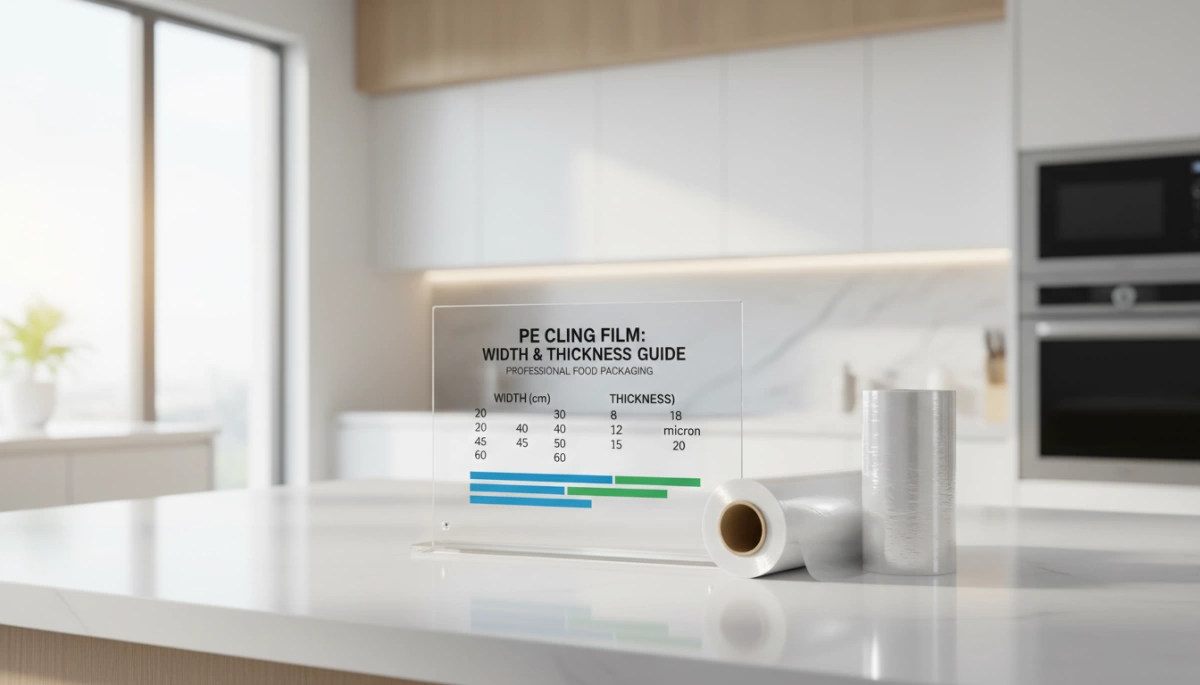
As a PE cling film factory, we keep our size range simple and practical for how U.S. homes, restaurants, and food plants actually work. Here’s a quick width and size guide you can use when choosing polyethylene food wrap sizes for your kitchen or operation.
Standard PE Cling Film Widths for Household Use (8–12 in)
For home kitchens, the most common PE cling film standard widths are:
- 8 in (20 cm) – Ideal for small bowls, half-cut fruits, kids’ snacks.
- 10 in (25 cm) – Great all-round home use cling film width for plates and medium containers.
- 12 in (30 cm) – Best for large dinner plates, baking dishes, and meal prep containers.
Typical roll lengths for home use:
- 50–300 ft (15–90 m) per roll, depending on how often you wrap.
These sizes fit most U.S. countertop cutter boxes and drawer organizers without wasting space.
Standard PE Cling Film Widths for Commercial Kitchens (35–45 cm)
For restaurants, cafeterias, and ghost kitchens, commercial cling film roll sizes are usually:
- 14 in (35 cm)
- 18 in (45 cm) – the workhorse size in many U.S. kitchens
These widths cover:
- Full and half GN pans
- Sheet pans
- Prep containers on the line
Common roll lengths:
- 1,000–2,000 ft (300–600 m), to cut down on roll changes during busy service.
If you’re buying for bulk use, it’s worth aligning your film sizes with your food packaging strategy, similar to how you’d plan other bulk food wrap purchases for restaurant operations. You can see this approach in guides on choosing the best food wrap for bulk orders.
Wide PE Cling Film Rolls for Catering and Food Service (20–24 in)
For banquets, hotel pans, and large-format trays, wide PE cling film rolls are key:
- 20 in (50 cm)
- 24 in (60 cm)
Best for:
- Full-size steam table pans
- Large bakery trays
- Bulk-prep containers and sheet pans
Roll lengths are usually:
- 1,000–2,000 ft (300–600 m) per roll, designed for high-volume use.
Typical PE Cling Film Thickness by Width
We match cling film thickness and width to the application:
- Household widths (8–12 in):
- 8–12 microns – everyday wrapping, leftovers, refrigerator storage.
- Commercial widths (14–18 in):
- 10–14 microns – better puncture resistance for pans, metal edges, and busy prep lines.
- Wide catering widths (20–24 in):
- 12–18 microns – stronger film for heavy trays, stacked storage, and transport.
Thicker film = better tear resistance and cling on larger surfaces.
Common Roll Length Options by Width
We usually pair PE cling film roll dimensions like this:
- 8–12 in (home):
- 50 ft, 100 ft, 200 ft, 300 ft
- 14–18 in (commercial):
- 1,000 ft, 1,500 ft, 2,000 ft
- 20–24 in (catering / industrial):
- 1,000–2,000 ft, and jumbo options for machine use
Custom roll lengths are available if you’re standardizing for chain restaurants or central kitchens.
Dispenser, Cutter, and Machine Compatibility
Width matters a lot for PE stretch wrap compatibility:
- Countertop cutter boxes:
- Typically sized for 12 in, 14 in, and 18 in rolls.
- Wall-mounted dispensers & slide cutters:
- Usually matched to 18 in rolls in U.S. commercial kitchens.
- Wrapping machines / auto-wrappers:
- Need precise core size, width, and outer diameter; most use 14–18 in film, but industrial lines may run wider rolls or jumbo sizes.
- Butcher / deli stations:
- Often standardized on 12–18 in widths based on tray size.
If you tell us your dispenser brand, cutter style, or wrapping machine model, we can match the food grade PE wrap specifications so you don’t run into fit issues or wasted rolls.
PE Cling Film Widths by Application
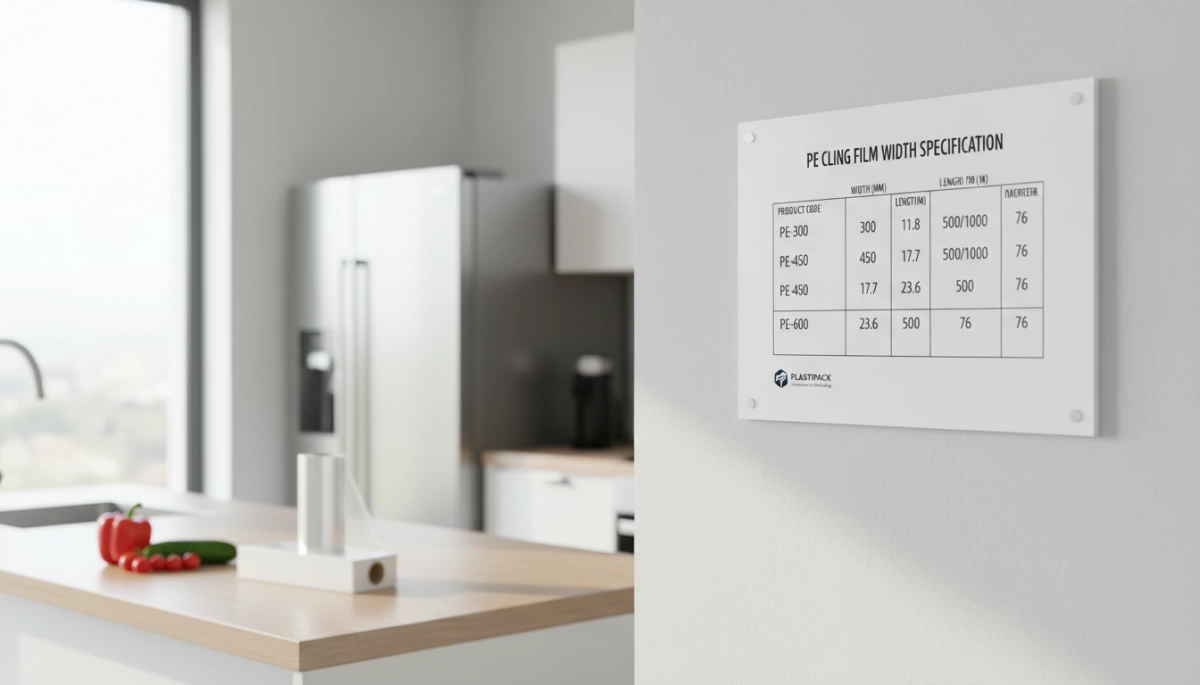
As a PE cling film factory, we match each roll width to real-world use. Here’s a quick width guide so you’re not fighting the roll every time you wrap.
Home Kitchen Cling Film Width Guide
For most U.S. households, these PE cling film standard widths work best:
- 8 in / 20 cm – Small bowls, cut fruit, half onions, cups, and kids’ snacks
- 10 in / 25 cm – Everyday size for plates, small leftovers, meal-prep containers
- 12 in / 30 cm – Large dinner plates, casserole dishes, mixing bowls, sheet pans
If you only choose one for home, 12 in (30 cm) is usually the most practical home use cling film width.
Commercial Food Service Width Recommendations
For restaurants, cafeterias, and ghost kitchens, you want widths that match GN pans and prep stations:
- 18 in / 45 cm – Covers full-size sheet pans, hotel pans, and most prep tables
- 14–16 in / 35–40 cm – Good for half pans, small prep areas, and refrigerated storage
- 12 in / 30 cm – Utility width for small containers, sauces, and backup storage
These commercial cling film roll sizes keep wrapping fast and reduce film waste during busy service.
Catering and Buffet Service Width Choices
Catering and buffet lines need wider polyethylene food wrap sizes for speed and coverage:
- 18–20 in / 45–50 cm – Chafers, buffet trays, and large serving platters
- 22–24 in / 55–60 cm – Extra-wide trays, hotel pans in racks, and transport carts
For event work, we usually recommend one medium width (30–33 cm) plus one wide roll (45–50 cm) so staff can wrap anything on the fly.
Industrial & Machine-Use PE Cling Film Widths
For factories, commissaries, and auto-wrapping lines, we customize cling film roll dimensions to your equipment:
- Jumbo rolls (18–24 in / 45–60 cm) – High-volume food processors and central kitchens
- Machine widths (280–450 mm / 11–18 in) – Auto-wrappers, tray sealers, and flow-pack style machines
- Core and width matched to OEM specs – To avoid snapping, drifting, or poor tension
If you’re running automated lines, we’ll build PE stretch wrap compatibility around your machine drawings and speed.
Specialty Widths for Bakery, Butchery & Deli
Specialty food operations often need more specific food grade PE wrap specifications:
- Bakery – 12–16 in (30–40 cm) for proofing trays, cake boards, and dough bins
- Butchery – 16–18 in (40–45 cm) for meat trays, cutting boards, and primals
- Deli & cheese – 10–14 in (25–35 cm) for sliced meats, cheese blocks, and small pans
For customers focusing on greener packaging across bakery or deli lines, pairing the right width with sustainable food storage solutions for retail chains can be a strong selling point for U.S. shoppers who care about waste and packaging impact (see how retailers position eco storage solutions).
How to Choose the Right PE Cling Film Width
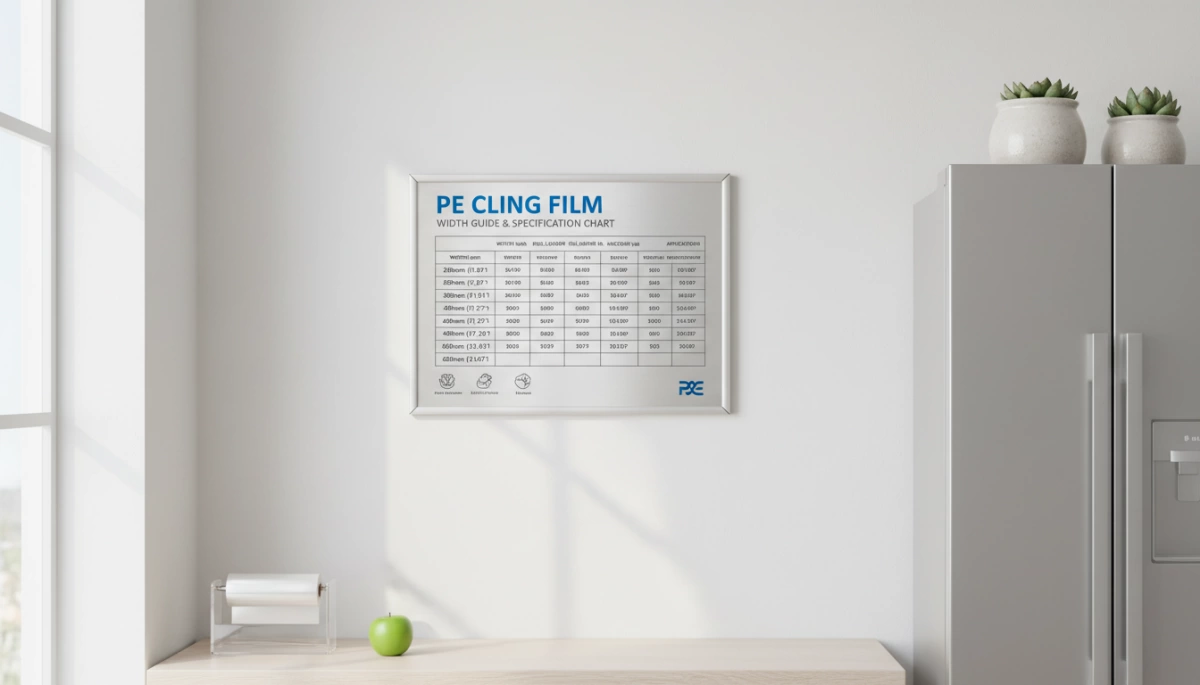
Match PE Cling Film Width to Container Size
Choosing the right PE cling film width starts with the containers you use most:
| Container / Food Type | Recommended PE Cling Film Width |
|---|---|
| Small bowls, cut fruit, half onions | 8–10 in (20–25 cm) |
| Dinner plates, meal prep containers | 10–12 in (25–30 cm) |
| Sheet pans, cutting boards | 14–18 in (35–45 cm) |
| Full pans, buffet trays, big platters | 18–24 in (45–60 cm) |
Rule of thumb: Pick a width slightly wider than your usual plate or pan so you get a tight wrap in one pass.
Consider Usage Frequency & Roll Change Efficiency
For homes and food businesses in the U.S., I recommend:
- High-volume kitchens (restaurants, delis, catering):
- Use wider rolls (18–24 in) with longer roll lengths to reduce changeouts.
- Standard commercial PE cling film roll sizes cut labor time and keep prep lines moving.
- Home kitchens:
- 11–12 in width with medium roll length is enough for most daily use.
- If you meal prep a lot, step up to a longer roll so you’re not swapping boxes every week.
Dispenser & Cutter Box Compatibility
Width must match your dispenser:
- Cutter boxes: Buy PE cling film standard widths (usually 12″, 18″, 24″) that match the size printed on your cutter box.
- Wall or counter dispensers: Check maximum roll width and core size before ordering.
- Wrapping machines / auto-wrappers: Always follow the machine’s recommended polyethylene food wrap sizes and film tension specs.
If you’re already using plastic storage bags, it helps to think of cling film widths and food bag sizes together when planning your system. For example, when customers compare cling film to alternatives like food-safe plastic bags for storage, they usually settle on a small set of standard sizes that cover 90% of daily tasks.
Plan Storage Space for Different Roll Widths
Wide rolls save time but take space. For U.S. kitchens:
- Home: One 12″ roll in a drawer + optional 18″ roll in a pantry.
- Commercial:
- 12″ near sandwich/salad prep
- 18″–24″ near hot line and sheet pans
- Store backup rolls vertically on a rack to save shelf depth.
Reduce Film Waste & Improve Wrapping Efficiency
Width has a huge impact on waste:
- Too narrow: You overlap multiple strips → more film used, weaker seal.
- Too wide: You trim excess off every time → straight waste.
To cut waste:
- Match PE preservative film measurements to your most common pan size.
- Use straight pulls, not diagonal wraps.
- Train staff to pull only what they need—no “just in case” extra.
How Width Affects Freshness, Seal, and Handling
PE stretch wrap compatibility and width directly affect performance:
- Right width = better seal: One clean wrap with a small overlap keeps air and odors out.
- Too narrow: Gaps, poor cling on the underside, faster drying and odor transfer.
- Too wide: Bunching and folds that trap air; harder to handle with one hand.
Bottom line:
Pick PE cling film roll dimensions that match your plates and pans. The right width means less waste, faster wrapping, and better food freshness—whether you’re running a busy line or just packing leftovers at home.
Eco-Friendly PE Cling Film Width Options
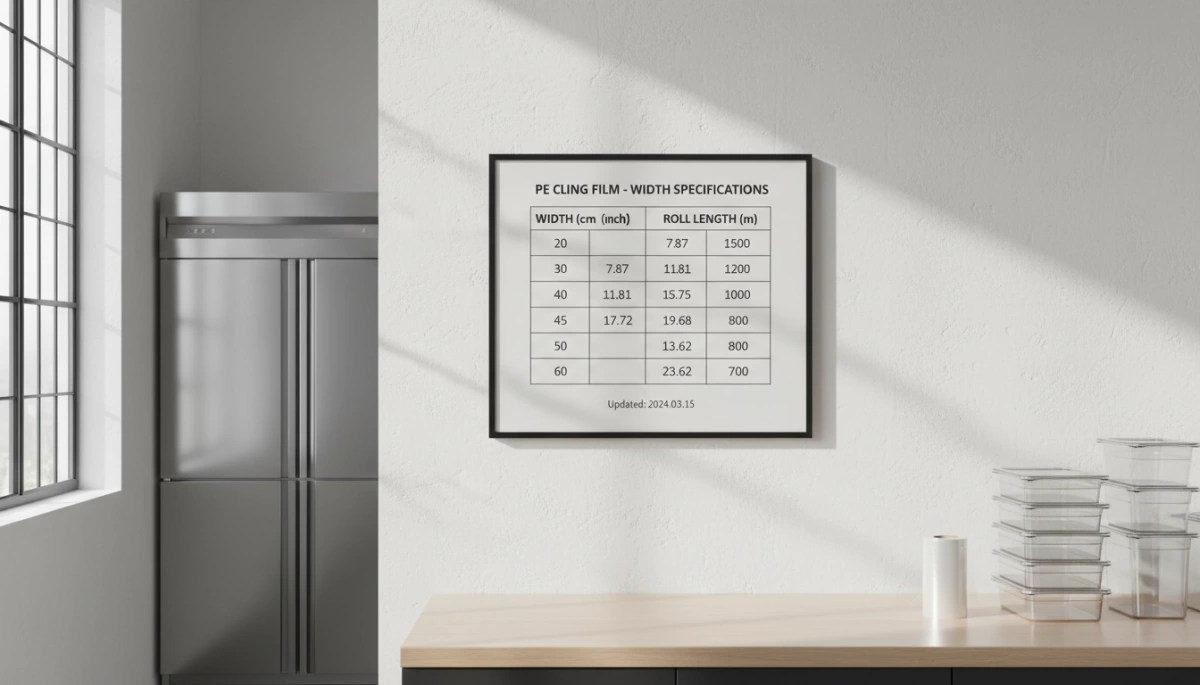
As a PE cling film factory, I focus a lot on getting eco-friendly PE cling film widths right for both home and commercial buyers in the U.S.
Standard Widths in Biodegradable PE Cling Film
Most biodegradable PE cling film rolls follow familiar sizes so you don’t need new dispensers:
| Application | Common Biodegradable Widths | Typical Thickness |
|---|---|---|
| Home kitchen | 8″, 10″, 12″ (20–30 cm) | 8–12 microns |
| Restaurants / cafés | 14″, 16″, 18″ (35–45 cm) | 10–15 microns |
| Catering / bulk use | 20″, 24″ (50–60 cm) | 12–18 microns |
These PE cling film standard widths match most US cutter boxes and wall dispensers.
Recyclable PE Cling Film Sizes
For recyclable PE cling film, we keep sizes in line with common polyethylene food wrap sizes so staff and families don’t have to change habits:
| Use Case | Typical Recyclable Widths | Roll Length Options |
|---|---|---|
| Home use | 8″, 10″, 12″ | 200–1000 ft |
| Commercial kitchens / delis | 12″, 14″, 18″ | 1000–2000 ft |
| Food processing / industrial use | 18″, 20″, 24″+ | 2000–4000+ ft |
Eco-Friendly vs. Traditional Widths & Performance
- Widths: Eco-friendly rolls use the same cling film roll dimensions as standard PE and PVC, so most dispensers fit without issues.
- Performance:
- Cling and stretch are now very close to traditional PE.
- Some ultra-thin biodegradable grades can feel slightly less “sticky” on very smooth surfaces; we usually bump the thickness by 1–2 microns to balance that.
- Heat & safety: PE is naturally BPA- and plasticizer-free, and our eco lines are designed to stay microwave safe within normal use (avoid direct contact with fatty food at very high temps).
Sustainable Buying Tips (Width, Thickness, Roll Length)
If you want greener food grade PE wrap specifications without sacrificing efficiency:
- Pick the narrowest width that covers in one pass
- 12″ for most plates/bowls at home
- 18″ for standard restaurant pans and prep tables
- Match thickness to the job
- 8–10 microns: light home use, short-term storage
- 10–14 microns: restaurant prep, deli, bakery
- 14–18 microns: heavy handling, transport, catering
- Optimize roll length
- Home: 200–750 ft to avoid bulky storage
- Commercial: 1000–2000 ft to cut labor and roll changes
- Consolidate SKUs
- Most kitchens run efficiently with just two widths (e.g., 12″ + 18″) instead of four or five. Less waste, easier inventory.
If you’re exporting food packaging or building an eco-focused product line, aligning cling film sizing with your other packaging SKUs and logistics—similar to how we structure global supply chain support for cling film export—can also cut waste and freight costs.
PE Cling Film Width FAQ and Practical Tips
Most common PE cling film width for household use
For U.S. homes, these PE cling film standard widths cover almost everything:
| Use case | Recommended width | Notes |
|---|---|---|
| Everyday bowls/plates | 11–12 in (28–30 cm) | Most common supermarket size |
| Small leftovers/snacks | 8–10 in (20–25 cm) | Less waste on small portions |
| Large dishes/trays | 12–14 in (30–35 cm) | Great for baking pans, casseroles |
In our factory, 30 cm (12″) is the top seller for U.S. households thanks to its balance of coverage and low waste.
Custom PE cling film width and size options
If you’re buying for a brand, chain, or factory, we can customize:
| Spec type | Custom range (typical) |
|---|---|
| Width | 20–60 cm (8–24 in) |
| Thickness | 8–20 microns |
| Roll length | 100–3000 ft |
| Core size | 1″ / 2″ / 3″ paper core |
Custom polyethylene food wrap sizes are ideal when you want:
- Perfect fit for your dispensers or wrapping machines
- Less trimming and film waste
- Standardized food grade PE wrap specifications across locations
Width differences: PE vs PVC cling film
In the U.S., PE and PVC cling film widths overlap, but usage is different:
| Material | Typical widths | Common users |
|---|---|---|
| PE | 20–60 cm (8–24 in) | Homes, supermarkets, processors |
| PVC | 30–45 cm (12–18 in) | Restaurants, butcher, deli |
Key points:
- PE is more popular for home use cling film width because it’s safer for direct food contact, especially fatty foods.
- PVC often has stronger cling, but more limits with high fat and high heat.
- If you’re standardizing across sites, keep PE cling film roll dimensions consistent with your existing PVC dispensers.
Microwave safety by PE cling film width
With PE cling film, microwave safety depends more on material and temperature rating, not width:
- Always check: “Microwave safe” or FDA-compliant food contact on the box.
- Keep film from touching the food surface, especially oily or high-fat foods.
- Open a small vent corner to release steam.
- Use any standard width (8–18 in) safely as long as the film is microwave-rated PE.
For packed lunches or reheating, pair microwave safe food wrap widths with stainless bento boxes or glass containers; our guide to a stainless steel bento lunch box shows a good combo for daily meal prep.
How to store and organize different PE cling film widths
Good storage keeps cling film roll sizes clean, easy to grab, and efficient:
At home (kitchen):
- Keep daily-use 30 cm (12″) roll in a drawer or on a wall-mounted dispenser.
- Store backup rolls upright in a pantry to avoid crushing the edges.
- Label the box front with: width + length for quick picking.
In commercial kitchens / storerooms:
| Width | Storage tip |
|---|---|
| 20–30 cm (8–12 in) | Keep near prep stations and cold table lines |
| 35–45 cm | Store by sheet pans / GN pans |
| 50–60 cm | Place close to tray lines and packing tables |
Practical tips:
- Group rolls by width on shelves (small > medium > wide).
- Match each width to a dedicated dispenser or cutter box to speed up wrapping.
- Avoid heat and direct sunlight to protect PE preservative film performance.
This setup keeps your recyclable food cling wrap dimensions easy to manage and reduces day-to-day frustration on the line.